Eubrics Gets super{set} Backing for AI Sales Coaching
When a salesperson finishes training, the software can record completion. The customer conversation that follows creates a harder record: whether the rep recognized the problem, handled the objection, stayed compliant, and advanced the deal.
Eubrics is building for that second record. The enterprise training and sales-performance company has received undisclosed early-stage backing from super, the San Francisco venture studio that combines capital with hands-on company building.
The September 9, 2026 announcement names Eubrics as a new super portfolio company and describes support across capital, operators, developers, talent, and go-to-market execution. Funding coverage characterizes the investment as pre-seed, but the official release does not disclose an amount, valuation, ownership stake, instrument, or additional investors.
That boundary matters because the useful story is not a mystery check. It is the operating bet underneath the relationship: Eubrics wants to turn simulated practice and AI feedback into measurable field readiness, while super is helping the company build a repeatable North American enterprise business around that promise.
What Eubrics Is Building
Eubrics was founded in 2021 by Nikita Jain and Maxim Dsouza. Jain, the company's Co-founder and CEO, spent more than a decade in HR consulting, capability development, and enterprise transformation, including work at EY, Korn Ferry Hay Group, and PwC. Dsouza, Founder and CTO, brings engineering leadership from Apple and experience building earlier startups.
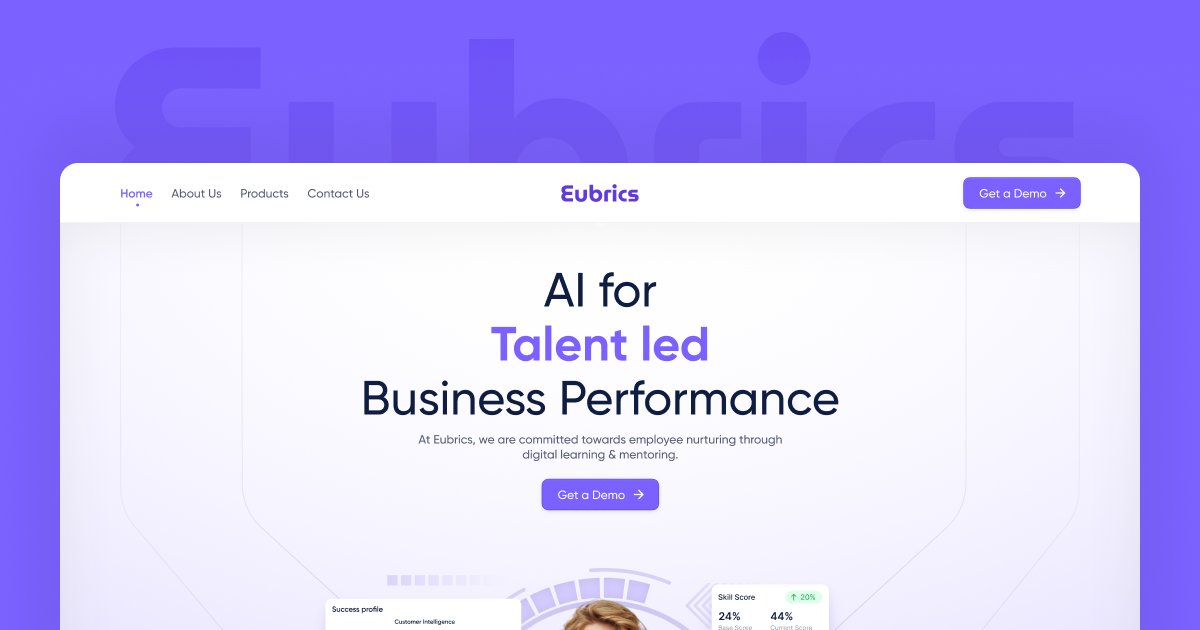
Their product focuses on the point where knowledge must become behavior. Eubrics lets sales teams practice outreach, discovery, objection handling, negotiation, renewals, and expansion against AI-driven buyer personas. Companies can configure scenarios around their products, customers, sales stages, methodologies, and compliance requirements, then use immediate feedback and competency scoring to guide coaching.
That makes Eubrics different from a content library whose job ends when a learner presses complete. The company is trying to connect practice with the language enterprise buyers use to defend budgets: readiness, conversation quality, compliance, conversion, and revenue. Managers are not only assigning training. They are looking for evidence about where judgment holds, where it fails, and which coaching intervention should come next.
The Measurement Problem Behind the Product
Enterprise learning has always had a measurement problem. Attendance, course completion, assessment scores, and hours consumed are clean administrative signals, but they do not automatically explain how an employee will behave in an unscripted customer interaction.
AI roleplay changes the unit of practice. A seller can face a skeptical buyer persona, attempt discovery, work through objections, and receive feedback without waiting for a manager to schedule a mock call. The organization can repeat the exercise across a larger team and use a shared scorecard instead of depending entirely on each manager's availability and coaching style.
The evidence still needs careful handling. Eubrics publishes an anonymous insurance case study reporting that ramp time fell from 90 days to 15 days, closures increased 19%, and revenue per lead rose 25%. Those figures are company-reported and the customer is unnamed, so they should be read as product evidence rather than a transferable benchmark for every sales organization.
The official super announcement names Kohler, Accenture, Konica Minolta, Moog, and Clifford Chance among organizations using Eubrics. It also says Eubrics engagements are connected with revenue improvements at Fortune 100 firms. The release does not disclose the customer-by-customer configurations, baselines, or independent validation that would let an outside reader compare those outcomes directly.
Why super's Model Fits This Stage
super describes itself as a venture studio that supplies more than financing. Its model combines early capital with engineering, recruiting, company-building, and go-to-market work, starting from a defined customer problem and building outward toward a larger company.
That structure fits Eubrics' current challenge. The product must keep improving, but the larger job is organizational: identify the right buyer, design a credible proof-of-value program, navigate compliance and procurement, turn early deployments into references, and convert the resulting evidence into repeatable enterprise contracts.
Eubrics has taken an earlier step through Iterative's Winter 2023 cohort, where the accelerator identified Jain and Dsouza as founders and described the company as using AI to improve employee performance. The primary cohort source does not disclose an investment amount, and no reliable lifetime-funding total can be calculated from the available public record.
The North America Go-to-Market Test
The company's North American strategy is already visible in super's hiring material. A June 2026 Eubrics enterprise-sales listing describes a push into insurance, wealth management, private banking, retail banking, and commercial banking, with the first U.S. sales hire expected to open enterprise accounts and shape the local product message.
Financial services gives Eubrics a demanding proving ground. Advisers, agents, bankers, and relationship managers sell complex products through conversations where trust, suitability, disclosure, and institutional policy matter. A realistic simulation can create useful practice, but an enterprise buyer will still expect secure integrations, credible scoring, implementation support, and evidence that better rehearsal changes what happens with customers.
super's announcement says its support includes go-to-market talent and hands-on execution alongside founders. That may help Eubrics shorten the distance between a product demonstration and a durable commercial process, especially when the first U.S. accounts require founder involvement, customized pilots, and buying committees that stretch beyond the learning team.
What Operators Should Watch
The amount of this backing remains undisclosed, leaving the normal financing arithmetic incomplete. The more consequential evidence will emerge from the operating work: whether Eubrics can translate company-reported outcomes into repeatable proof, whether financial-services customers expand beyond pilots, and whether the product can measure readiness without reducing a complex human conversation to a decorative score.
For sales and learning leaders, Eubrics reflects a wider budget shift. Training is moving closer to the workflow, and its vendors are being asked to show how practice changes decisions, conversations, and commercial results. That creates room for AI roleplay, but it also raises the standard for evidence, governance, and customer trust.
The venture-studio relationship gives Jain and Dsouza resources for that next passage. Every new scenario, proof-of-value pilot, compliance review, and enterprise renewal will add detail to the record Eubrics is trying to create: a record of what people can do when the customer is listening, not merely what they completed before the call.
Frequently Asked Questions
What does Eubrics' AI sales roleplay platform do?
Eubrics lets enterprise sales teams practice realistic customer conversations with AI-driven buyer personas. It provides immediate feedback and competency scoring across activities such as discovery, objection handling, negotiation, renewals, and expansion.
Why is super{set}'s backing different from a traditional investment?
super operates as a venture studio and says it combines early capital with developers, operators, talent, and go-to-market support. For Eubrics, that support aligns with the work of building a repeatable North American enterprise-sales motion.
How much pre-seed funding did Eubrics receive?
The amount was not disclosed. Funding coverage describes the backing as pre-seed, while the official September 9, 2026 announcement confirms capital and portfolio support without publishing valuation, ownership, instrument, or check size.
Who founded Eubrics?
Eubrics was founded in 2021 by Nikita Jain, Co-founder and CEO, and Maxim Dsouza, Founder and CTO. Jain's background is in enterprise capability and HR consulting, while Dsouza brings engineering leadership and startup-building experience.
What should enterprise buyers watch as Eubrics expands?
Buyers should watch whether Eubrics can turn company-reported outcomes into repeatable, independently credible evidence across customers and regulated financial-services workflows. Security, integrations, scoring quality, pilot conversion, and expansion beyond initial deployments will matter.
Where the Money Moved
The intelligence briefing of the innovation economy. Funding, M&A, debt and fund closes, read as market signal rather than deal announcements.
Subscribe to Where the Money Moved