Tech ecosystems usually announce themselves with billion-dollar valuations, glossy conference stages, and enough branded tote bags to survive a small flood. Boston is trying something different. On Wednesday, May 27, the city’s founders, engineers, investors, and operators will gather at Fiedler Dock on the Esplanade for the “BOSTON STRONG: Tech Pushup Challenge” during #BOSTechWeek. The format is almost aggressively simple: show up at 7:30am, do pushups, meet people, track the total on a whiteboard, and start the day before the rest of the market finishes its second espresso.
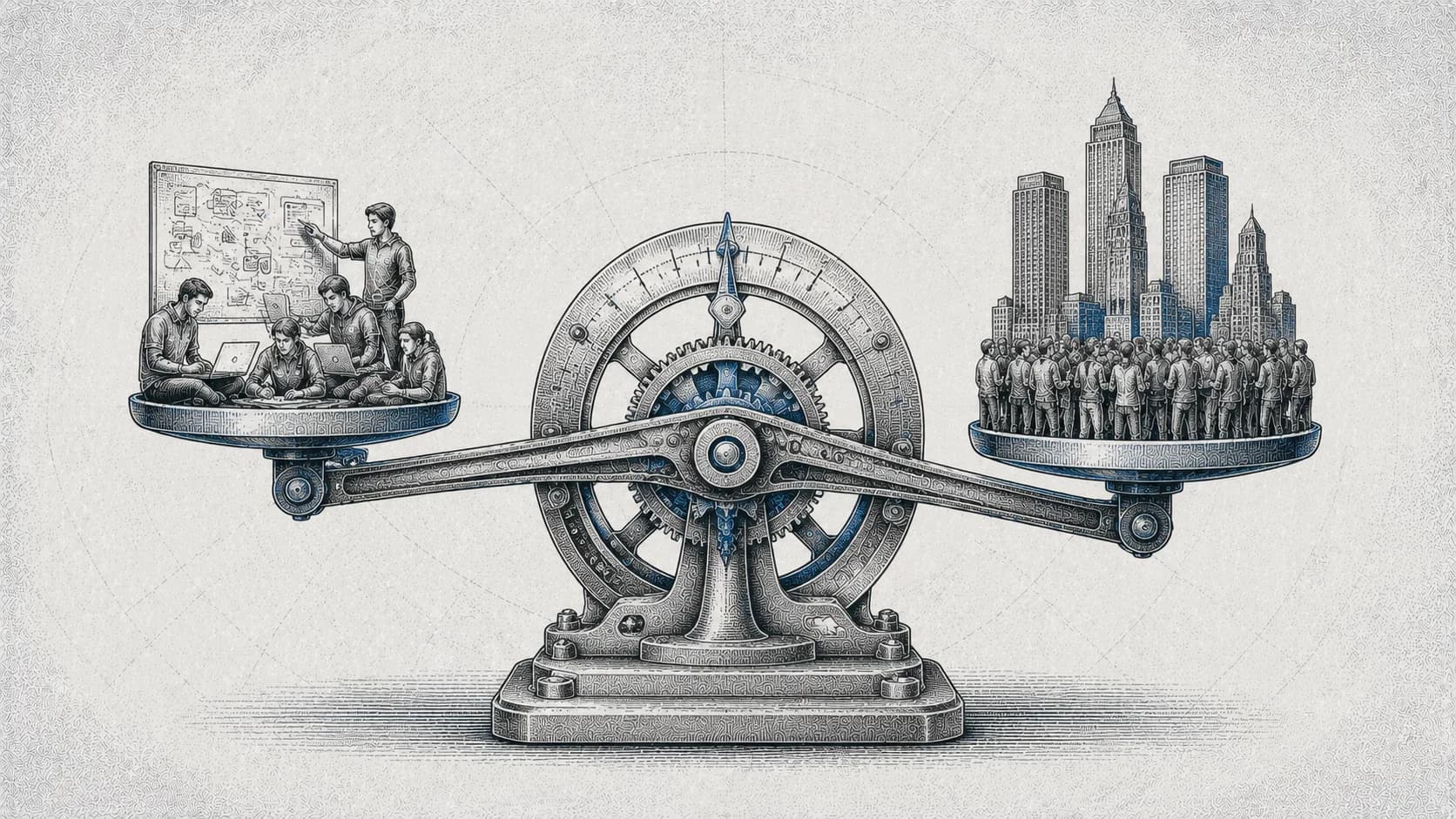
The event is hosted by Jack O'Brien, Co-Founder of Subconscious, and Ben Katz, Co-Founder & CEO of HYBRD. Subconscious operates in AI infrastructure while HYBRD focuses on personalized fitness and performance training. That pairing matters more than it initially appears because infrastructure and endurance have quietly become two defining obsessions of the modern startup economy. The broader significance sits underneath the workout itself. Boston Tech Week is emerging as a coordinated attempt to consolidate the city’s fragmented innovation identity into something culturally visible. The BOSTON STRONG Tech Pushup Challenge functions less like a networking event and more like a symbolic stress test for Boston’s founder ecosystem before the week officially accelerates.
The market implication is straightforward: startup ecosystems increasingly compete on density, trust, and recurring community rituals rather than pure technical talent alone. Boston already has the technical talent. The city is now trying to operationalize belonging.
About the BOSTON STRONG Tech Pushup Challenge
The BOSTON STRONG Tech Pushup Challenge is scheduled for Wednesday, May 27, from 7:30am to 9:00am ET at Fiedler Dock along Boston’s Esplanade. The event is associated with #BOSTechWeek and promoted within the broader Massachusetts AI Coalition ecosystem. According to the event description, participants will collectively track how many pushups Boston’s tech community can complete before the workday begins. The whiteboard tally reportedly carries an aspirational “100k?!” target. On its face, the concept sounds somewhere between startup summer camp and founder punishment theater, which is partly why it works.
The startup industry spent years optimizing for digital reach while quietly starving itself of physical community infrastructure. Founders became avatars inside Slack channels. Investors became profile photos trapped in Zoom grids. Entire early-stage ecosystems drifted into transactional networking behavior where introductions felt algorithmic and conferences felt like airports with better typography. The BOSTON STRONG Tech Pushup Challenge pushes directly against that fatigue. The event’s location matters too. Fiedler Dock sits beside the Charles River, one of the few places in Boston where biotech researchers, venture capital associates, MIT engineers, robotics founders, marathon runners, and sleep-deprived startup operators already cross paths naturally. Boston has always had intellectual density. The problem was converting that density into visible ecosystem cohesion.
Why Boston Tech Week Matters Right Now
Boston has lived in a strange market position for years. The city consistently produces elite technical talent, category-defining research institutions, and successful companies across biotech, robotics, healthcare, enterprise software, and fintech. Yet culturally, Boston often behaves like the smartest person at the party who refuses to make eye contact. That dynamic is changing.
Boston Tech Week reflects a broader movement happening across secondary and tertiary startup ecosystems. Cities outside Silicon Valley are no longer trying to imitate San Francisco’s mythology. They are building regional identities around industry specialization, operator networks, and community durability. The timing also matters because the AI cycle changed the hierarchy of startup ecosystems almost overnight. Infrastructure, compute, data orchestration, and applied AI have become foundational competitive layers across industries. Boston already possesses deep academic and technical infrastructure connected to AI development. The challenge now is social coordination.
That is where organizations tied to the Massachusetts AI Coalition enter the picture. Their role is less about marketing Boston and more about reducing friction between founders, operators, investors, and technical talent already concentrated in the region. The startup economy increasingly rewards ecosystems that can generate repeated high-trust interactions. Not just polished demo days. Not just pitch competitions. Actual recurring human rituals. A sunrise pushup challenge sounds ridiculous until you realize the modern startup economy has accidentally become desperate for exactly this type of ridiculousness.
The Operators Behind the Event
Jack O'Brien and Subconscious represent one side of the current AI market structure: infrastructure. While the event description jokingly states that Subconscious has “nothing to do with pushups,” the company’s positioning inside AI infrastructure aligns directly with where investor attention continues flowing across the market. Infrastructure companies occupy a strange position in the current AI cycle. They are simultaneously essential and largely invisible to the public narrative. Everyone talks about models. Fewer people discuss the operational layers underneath them. That invisibility often creates disproportionate strategic leverage.
Ben Katz and HYBRD represent a different but increasingly important category: performance technology. HYBRD focuses on personalized training and fitness, which places it inside a growing intersection between wellness, behavioral optimization, and software-driven human performance. Silicon Valley once treated physical health like an optional side quest for founders. The current market environment looks different. Longevity, recovery, discipline, endurance, and cognitive performance have become embedded into startup culture itself. Founders are now expected to operate like elite athletes while simultaneously pretending burnout is a branding strategy. The pairing of Subconscious and HYBRD unintentionally captures the broader AI economy perfectly. Machines are scaling faster. Humans are trying to keep up.
What This Signals About Startup Culture
The BOSTON STRONG Tech Pushup Challenge reflects a broader cultural correction happening across venture-backed technology ecosystems. For years, startup networking optimized for visibility over depth. Massive conferences expanded while actual trust networks became thinner. The result was a strange form of professional loneliness where founders attended endless events while building increasingly isolated companies. Now the pendulum is swinging back toward smaller, identity-driven gatherings where participation itself acts as social filtering.
Showing up at 7:30am beside the Charles River for collective pushups communicates something different than attending a catered evening mixer. It signals commitment, intentionality, and willingness to engage outside transactional norms. Sophisticated operators notice these signals quickly. Investors notice who consistently appears inside emerging ecosystems before those ecosystems become fashionable. Founders notice who contributes socially before asking for introductions. Engineers notice which communities feel alive versus artificially manufactured. That dynamic explains why seemingly low-production events often generate disproportionate relationship value. The strongest startup ecosystems are rarely built exclusively through institutional planning. They emerge through repeated shared experiences that slowly become community memory. Boston appears increasingly aware of that reality.
The Bigger Industry Shift
The larger story underneath Boston Tech Week is not really about pushups, fitness culture, or startup aesthetics. It is about ecosystem competition entering a new phase. Technical capability alone is no longer sufficient. Cities now compete on founder retention, operator density, social cohesion, and cultural momentum. AI accelerated that pressure because talent mobility increased while startup formation costs declined.
Founders can build from almost anywhere. The ecosystems that win will be the ones capable of creating durable human networks around technical excellence. Boston already owns the technical side of the equation. The city now appears focused on strengthening the emotional and cultural layers surrounding it. That shift matters because eventually every startup ecosystem learns the same lesson: capital scales companies, but community scales ecosystems.
 RSYNQ Raises $2M From Kanaden for Physical AI in Japan|Homa Raises $5M Seed for AI Homebuying and Mortgages|Origin Emerges With $20M Total for Construction Robots|
 Kutlerri.ai Raises $4M for Restaurant AI Sales Agents|
 AIsa Completes Seed Extension, Total Funding Tops $9M|Sharp Performance Raises $18M for First Responder Coaching|Molagri Announces $5.8M for Precision Biopesticides|Opsin Raises $21M for Enterprise AI Agent Security|Chariot Claims Raises $10M Series A for Consumer Arbitration|Sunbound Raises $24M Series A and Acquires Richter|