


Teddy AI Raises $60M for Legal Services Platform
Revenue can make a law firm look durable before anyone maps where the revenue lives. Concentrate too much of it in three clients or three lawyers, and a profitable practice can carry a departure risk that never appears in the hourly rate.
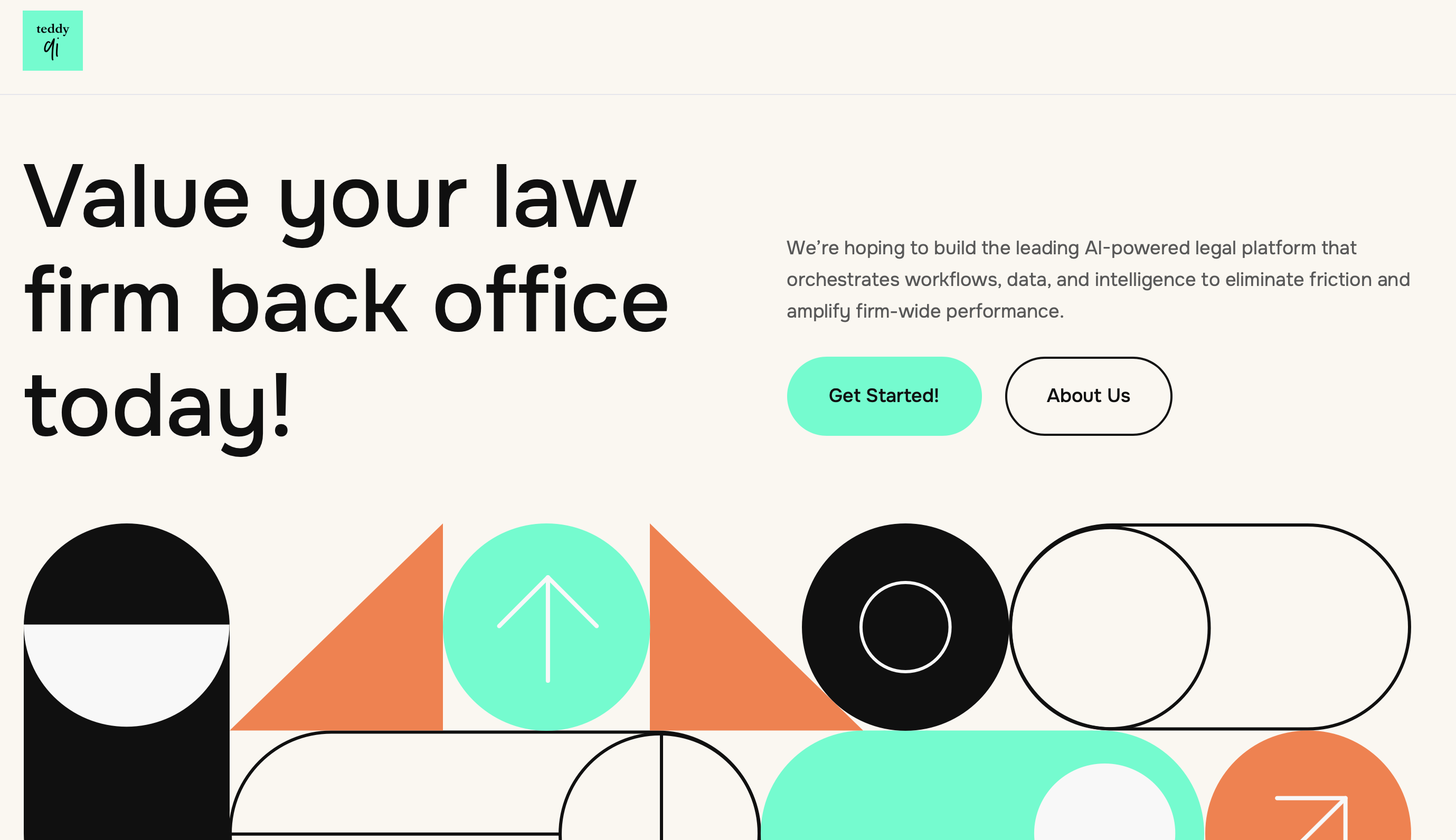
TeddyHoldings.AI, or Teddy AI, puts those questions at the front of its public law-firm valuation workflow. The compliance- and client-oriented legal services platform, incubated by Tucker's Farm Corporation, announced a $60M Seed round on October 7, 2026 after reporting more than $25M in 2026 business-to-business revenue.
The round finances an operating thesis rather than a conventional software pitch. Teddy AI is treating client trust, partner continuity, compliance, repeatable service and infrastructure as the system that technology must strengthen, not collateral details surrounding the AI.
What Teddy AI Announced
According to the official funding announcement, Teddy AI raised $60M in Seed equity from investors it describes as traditional limited partners, including an endowment manager, anchored by repeat partners. The company did not name a lead investor or disclose its cap table, valuation or detailed financing terms.
Kyle Tucker, founder of Tucker's Farm's private-equity arm, said the company opened fundraising calls for roughly three weeks, received about $115M of varied equity interest and chose to close $60M. That account is company-reported, as is Teddy AI's statement that it passed $25M in B2B revenue in 2026. No earlier Teddy AI round was identified, making $60M the company's total disclosed funding.
Teddy AI is also keeping its specific legal-services focus and leadership confidential. Kyle Tucker is the announcement's spokesperson and the founder of the incubating company's private-equity arm; he is not publicly identified as Teddy AI's CEO or founder. Teddy AI's headquarters, customer roster and named executives remain undisclosed.
The Valuation Form Explains the Strategy
Teddy AI's public website is organized around a law-firm valuation and partnership workflow. It asks about three years of revenue, the number of lawyers and total employees, annual lawyer and client losses, client and lawyer concentration, recurring revenue, geography, business age and whether the firm may be interested in selling.
That is closer to an operating diligence checklist than a software demo. A law firm can report healthy revenue while carrying meaningful concentration risk if a few clients or rainmakers control the economics. It can also have capable lawyers while lacking the systems that make compliance, service quality and institutional knowledge durable across people and offices.
The site says Teddy AI aims to provide legal partners with compliance, operational and technological infrastructure. It also sets an indicative partnership cadence: a response within 48 hours, a support proposal within five days and a potential close within two months. The site does not disclose any completed acquisition or partner firm, so those timelines should be read as the company's stated process, not proof of a completed transaction.
Why Legal AI Is an Operating Question
Teddy AI's positioning matters because the legal AI debate is moving beyond whether a model can summarize, draft or search. The American Bar Association's Formal Opinion 512 says lawyers using generative AI still must meet duties involving competence, confidentiality, client communication, supervision, candor and reasonable fees.
Those obligations make the infrastructure around the model as important as the model itself. A faster drafting workflow is useful only if a firm can protect client information, supervise outputs, explain its methods, price the work responsibly and keep accountability with the professionals serving the client.
The commercial pressure is arriving at the same time. The Thomson Reuters Future of Professionals 2026 legal report says 77% of clients view AI-enabled quality improvements as very important or essential, while only 5% say most or all outside providers deliver them. The report also says 71% of in-house legal professionals expect outside firms to change their commercial models as AI use rises, while 28% of law firms report changing pricing in response.
What the $60M Changes
Teddy AI now has capital to build around that gap between client expectations and firm operations. The company has not published a use-of-funds allocation, product architecture, acquisition pipeline or hiring plan, so the round should not be converted into a roadmap that management did not disclose.
What the company has disclosed is a partnership model focused on compliance, client service and performance. Its website turns those ideas into practical questions about concentration, recurrence, attrition and staffing. That suggests the platform's work will be judged across both service quality and business durability, not simply by how much automation it can introduce.
Tucker's Farm brings an acquisition and long-duration ownership orientation to the incubation. Kyle Tucker has also argued that generic AI rollups may struggle to preserve a unique margin advantage when competitors can buy or build similar tools. That skepticism makes Teddy AI's choice of legal-services infrastructure more consequential: the differentiation has to live in the operating system around the technology, the partner relationships and the quality of client outcomes.
What Remains Undisclosed
The announcement leaves several important questions open. Teddy AI has not named its leadership, investors, legal-services niches, customers, partner firms or security controls. It has not said whether the reported $25M in revenue is audited, how much of the $60M will support acquisitions, or how its technology will handle confidential client information.
That opacity limits what can be concluded from the round, but it also identifies the evidence that will matter next. Teddy AI has funded a substantial legal-services platform before showing the market its roster, portfolio or technical controls. The valuation form makes its diagnosis visible; the operating record will have to show how client concentration, lawyer dependency, compliance and technology behave after those firms enter the same platform.
Frequently Asked Questions
What does Teddy AI do for law firms?
Teddy AI describes itself as a compliance- and client-oriented legal services platform. Its public site says it provides legal partners with compliance, operational, and technology infrastructure, although the company has not disclosed its exact legal niche or partner roster.
Why does Teddy AI ask about client and lawyer concentration?
Revenue concentrated among a few clients or lawyers can make a professional-services business vulnerable when a relationship changes. Teddy AI's valuation workflow also examines attrition and recurring revenue, indicating that it evaluates the durability of a law firm's operating model, not revenue alone.
Who invested in Teddy AI's $60M Seed round?
Teddy AI has not named a lead investor or published its cap table. Kyle Tucker described the backers as traditional limited partners, including an endowment manager, anchored by repeat partners.
Is Teddy AI a legal software company?
The company presents itself as a legal services and support platform rather than a conventional AI software vendor. It says technology will be used to improve compliance, client service, performance, and operating infrastructure.
What should operators watch after the funding round?
The main evidence gaps are Teddy AI's leadership, partner firms, investor roster, security controls, product architecture, and use of funds. Those disclosures will show how the platform translates its law-firm valuation thesis into operating results.
Where the Money Moved
The intelligence briefing of the innovation economy. Funding, M&A, debt and fund closes, read as market signal rather than deal announcements.
Subscribe to Where the Money Moved