

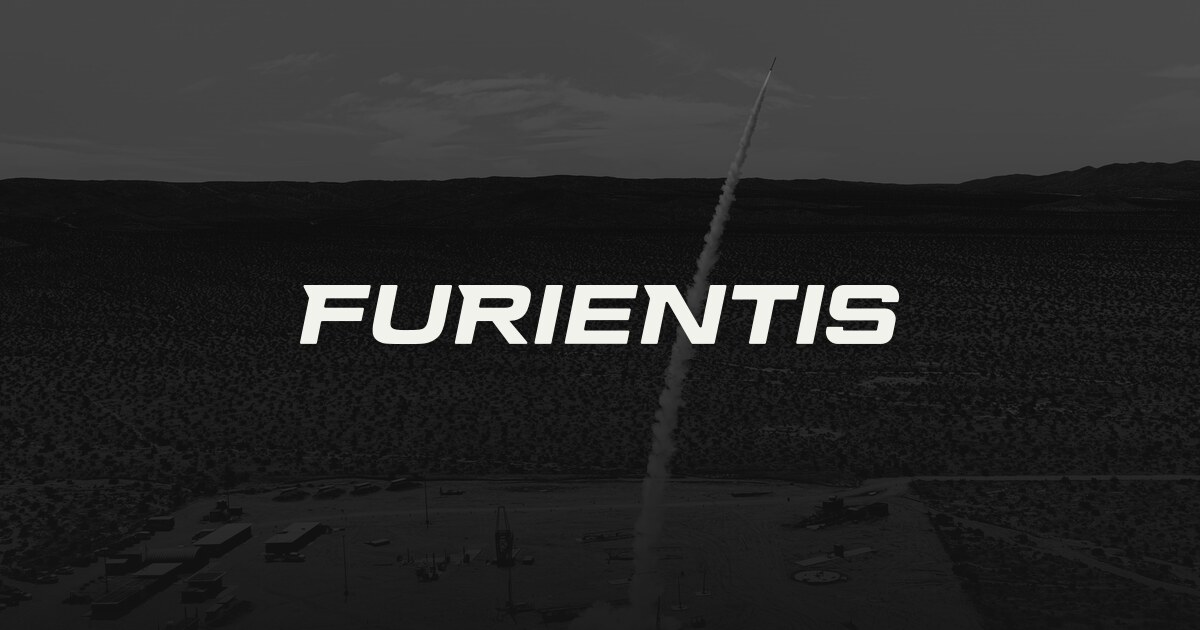

Furientis Raises $25M to Scale Missile Interceptors
A missile can hit its target and still lose the production argument. If the factory needs years to replenish what a fleet can expend in months, the engineering victory arrives attached to an inventory problem.
Furientis has raised a $25M Seed round led by Benchmark to push a different design logic: treat manufacturing rate as a requirement inside the interceptor, not a repair job after the prototype works. The Los Angeles-area defense startup also announced a funded government prototyping agreement for a 100-mile-range interceptor intended for homeland defense, putting private capital and a public performance gate behind the same manufacturing thesis.
What Furientis Announced
The October 6 financing follows a $5M pre-seed that Furientis announced in May, bringing publicly disclosed funding to $30M. Benchmark led the Seed, and General Partner Chetan Puttagunta joined the Furientis board. TechCrunch reported a $125M valuation based on a person familiar with the company; Furientis did not disclose that valuation in its own announcement.
Furientis was founded in May 2025 by Brody Franzen, co-founder and CEO, and Aris Simsarian, co-founder and Head of Propulsion. Franzen previously worked across structural design, structural testing, and Deputy Chief Engineer roles at Virgin Galactic before joining Castelion. Simsarian spent five years at Virgin Orbit, including work as a Propulsion Test Engineer and Head of Engine Test, before moving into electric-aircraft systems testing at Supernal.
The round arrived with a second milestone. Furientis said it signed a funded prototyping Other Transaction Agreement covering development of a 100-mile-range interceptor for homeland defense. The agreement requires the company to demonstrate flight-vehicle performance against government requirements, which makes the contract more consequential than a logo on a customer slide and less final than a production award.
Designing the Factory Into the Interceptor
Furientis is building its F1.0 tactical interceptor around a public target of 1,000 vehicles per factory per year and 30 minutes of final assembly per vehicle. Those numbers are targets rather than verified current output, but they shape real design choices across the airframe, propulsion, controls, seeker, and guidance stack.
The company says it uses commercial or industrial-grade components where they meet the requirement, designs major vehicle sections for deterministic assembly, and builds solid rocket motors and seekers in-house. That approach trades the reflex to specify bespoke aerospace hardware everywhere for a narrower question: which parts genuinely need to be exquisite, and which can be sourced, assembled, tested, and replaced at industrial volume?
Furientis reported 21 vehicle tests during the preceding 10 months, including 13 flight tests and 8 static fires. It also said the first of two planned propellant-manufacturing facilities can support motor production and testing at a rate of up to dozens per month. These are company-reported operating figures, but they give Benchmark and government customers something more useful to examine than a simulation deck: hardware moving through a repeated test loop.
Why the Production Clock Matters
The interceptor market is under pressure from both ends. Threats can be produced and launched in volume, while many defensive systems remain expensive, specialized, and slow to replenish. CSIS has argued that the United States needs a broader high-low mix of advanced and affordable munitions, along with more production capacity and more suppliers.
The Army is already expressing that demand through competitions for low-cost complete interceptors, solid rocket motors, seekers, guidance, and fire control. Its xTech Apex Intercept program independently lists Furientis as a finalist for a vertically integrated low-cost interceptor and fire-control concept. That does not validate every company claim, but it confirms that Furientis is working inside an active government search for new technical and manufacturing approaches.
The industrial problem is larger than the price of any one missile. The asset and people being protected can justify an expensive shot, but a magazine cannot fire inventory that the industrial base has not replaced. Furientis is betting that the useful comparison is therefore not simply cost per interceptor; it is qualified interceptors produced per factory, per month, with performance that survives government testing.
What the $25M Changes
Furientis says the Seed proceeds will support hiring, in-house manufacturing and testing, expanded flight operations, and progress across multiple customer programs. Its careers page listed openings across avionics, guidance and navigation, propulsion, seeker hardware, vehicle engineering, supply chain, finance, recruiting, and factory operations at the time of publication.
That hiring map is a quiet description of the next risk. Rapid prototyping depends on a small team moving quickly; rate production depends on supply chains, process control, quality systems, safety, facilities, and a workforce that can repeat the same result. The factory cannot remain an improvisation simply because the prototypes arrived quickly.
Benchmark's first pure-defense investment also carries a useful signal for the financing market. A generalist venture firm is underwriting a company whose value will be judged through hardware performance, procurement progress, and industrial throughput rather than software-style distribution alone. The bet may widen the capital available to defense manufacturers, but Furientis still has to make venture speed coexist with government qualification and production discipline.
The Proof Moves From Range to Factory
Furientis has moved from a garage-built motor and a $5M pre-seed to flight tests, a propellant facility, a funded prototype contract, and a $25M Seed in roughly 17 months. The pace is notable, and the official record now contains enough evidence to distinguish the company from a concept-stage pitch.
The next evidence will be harder to compress into an announcement. Furientis must demonstrate the 100-mile-range vehicle against government requirements, keep its test cadence productive, and show that the manufacturing choices behind a 30-minute assembly target can survive repeatability, safety, quality, and supply-chain pressure. The company's argument has always been that production capacity belongs inside deterrence; the factory is now where that argument has to keep earning its range.
Frequently Asked Questions
What does Furientis build?
Furientis builds missile interceptors designed around high-rate manufacturing. Its F1.0 architecture vertically integrates propulsion, airframe, controls, seekers and guidance while using commercial or industrial-grade components where requirements allow.
Who led Furientis's $25M Seed round?
Benchmark led the $25M Seed round announced on October 6, 2026, and General Partner Chetan Puttagunta joined the Furientis board. The official announcement did not publish a complete list of current-round participants.
How much funding has Furientis disclosed?
Furientis has disclosed $30M across a $5M pre-seed announced in May 2026 and the $25M Seed announced in October 2026. TechCrunch reported a $125M valuation from a person familiar with the company, but Furientis did not publish that valuation itself.
Why is Furientis focused on manufacturing rate?
Defensive missile inventories can be consumed faster than specialized production lines replenish them. Furientis is designing toward 1,000 interceptors per factory per year and 30 minutes of final assembly, though those figures are company targets rather than verified current output.
What does Furientis's government agreement cover?
The funded prototyping Other Transaction Agreement covers development of a 100-mile-range interceptor intended for homeland defense. Furientis must demonstrate the flight vehicle against government requirements, so the agreement should not be described as a full-rate production award or deployed capability.
Where the Money Moved
The intelligence briefing of the innovation economy. Funding, M&A, debt and fund closes, read as market signal rather than deal announcements.
Subscribe to Where the Money Moved