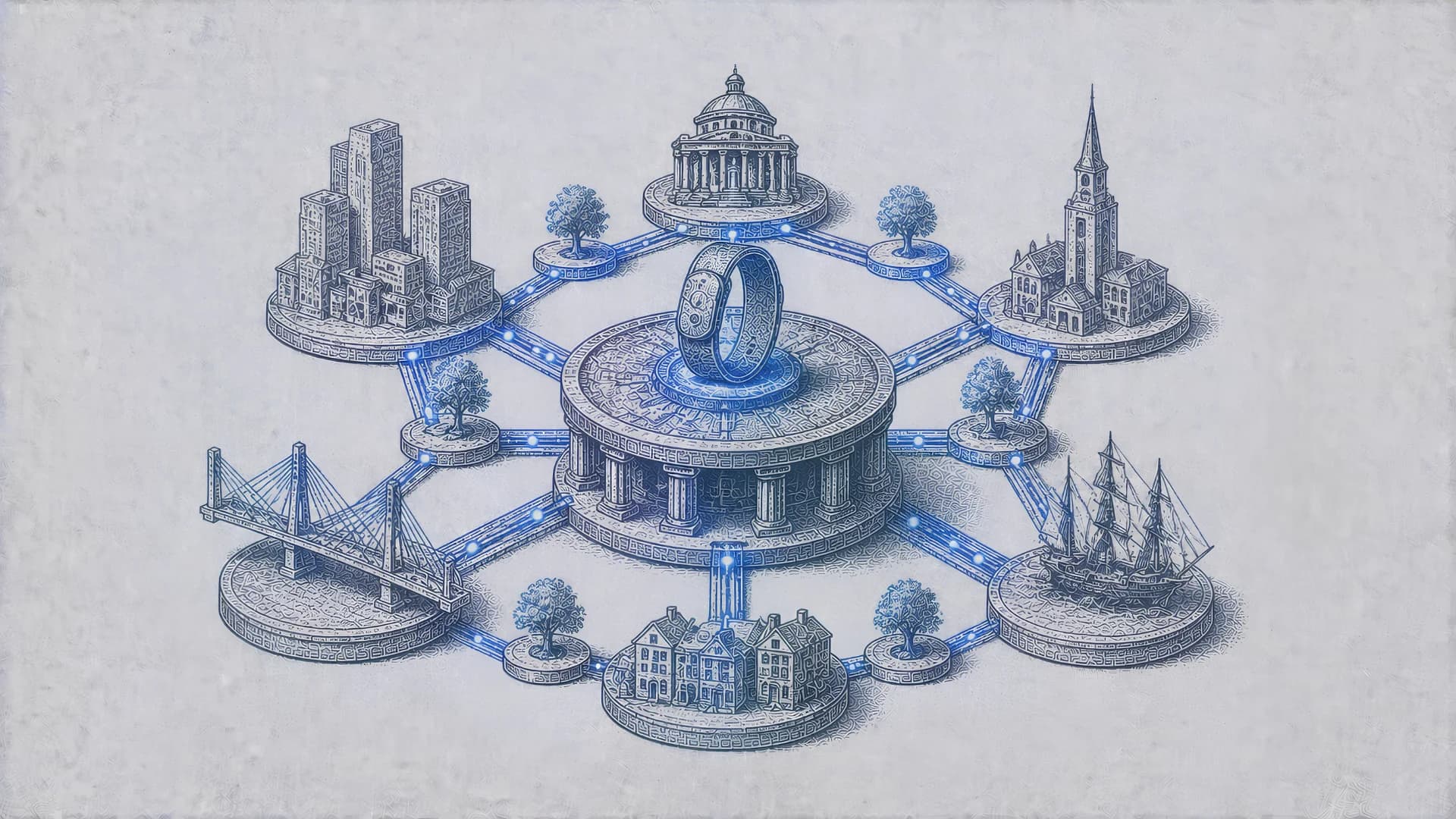
The upcoming New to Boston Party will take place at WHOOP's office in One Kenmore Square, Boston, bringing together people who have recently moved to the city or are still building local connections. Hosted by Durkin, Alana Mazzei, Sahithi Muthyala, and Samir Durvasula, the event is structured as a trivia-centered community gathering rather than a traditional networking event.
The event matters because it reflects a broader shift happening across startup ecosystems. As remote and hybrid work continue reshaping how professional relationships form, cities are increasingly relying on intentional community-building to help talent integrate, collaborate, and stay engaged locally. For Boston, one of the world's most concentrated innovation hubs, that challenge extends beyond attracting talent. The bigger opportunity is helping talented people build meaningful networks once they arrive.
Event: New to Boston Party Location: WHOOP, One Kenmore Square, Boston, Massachusetts Hosts: Durkin, Alana Mazzei, Sahithi Muthyala, Samir Durvasula Format: Trivia Night / Community Event Status: Upcoming
About the New to Boston Party
Boston has never struggled to attract ambitious people. The city continues to draw founders, operators, investors, researchers, students, and technology professionals from around the world. What has always been harder is helping those people quickly build a sense of belonging after they arrive.
That challenge sits at the center of the upcoming New to Boston Party, an event hosted at WHOOP and positioned as the first gathering in a broader New to Boston series. According to the event description, the evening is designed for people who have recently relocated to Boston or are still finding their footing in the city. The format is intentionally simple: trivia, conversation, introductions, and recommendations from people navigating similar experiences.
That simplicity is part of the value. Many networking events become exercises in professional theater. Attendees spend the evening exchanging polished versions of themselves while collecting contacts they may never speak to again. Everyone is networking. Few people are actually connecting. The New to Boston Party takes a different approach by organizing interaction around participation rather than transactions.
Why This Matters
The significance of the New to Boston Party extends beyond a single evening. Boston remains one of the most important innovation ecosystems in the United States, supported by universities, research institutions, hospitals, venture capital firms, startups, and a growing AI sector. Yet newcomers often face the same challenge: understanding how the ecosystem actually works.
Official directories are easy to find. Human networks are not. The most valuable information inside startup ecosystems often travels through relationships. People learn which communities are active, where opportunities are emerging, and which operators consistently create value through conversations, introductions, and trust.
Events like the New to Boston Party help accelerate those relationship-building processes. While the event is social by design, its long-term value comes from helping newcomers build the local context that often takes months or years to develop on their own.
Market Context: The Rise of Community Infrastructure
For years, startup ecosystems treated community as a byproduct of growth. The assumption was straightforward: attract enough talented people and connections will naturally form. Remote work and distributed teams have challenged that idea.
Professional networks are now broader than ever, while local networks are often weaker. Someone can collaborate with colleagues across multiple time zones every day and still know very few people in their own city. As a result, community-building is increasingly becoming a form of infrastructure.
The New to Boston Party reflects that shift. Rather than assuming newcomers will eventually integrate into Boston's ecosystem, the event creates a structured environment that helps make those connections happen sooner. That matters because talent mobility has become a defining feature of modern technology markets. Cities compete to attract talent. Increasingly, they must also compete to retain it.
Why Boston Matters Right Now
Boston occupies a unique position in today's technology landscape. The city sits at the intersection of academic research, healthcare innovation, venture capital, artificial intelligence, and startup formation. Institutions throughout Greater Boston continue to generate talent and intellectual property that influence industries far beyond New England.
At the same time, Boston competes against cities that are often perceived as more socially accessible. The city's reputation has traditionally been built on intellectual density rather than social convenience. That creates an opportunity for community builders who can help newcomers navigate the ecosystem more effectively.
Retention is becoming just as important as recruitment. Attracting talent is difficult. Giving talented people reasons to stay is even harder.
The Operators Behind the Event
The New to Boston Party is hosted by Durkin, Alana Mazzei, Sahithi Muthyala, and Samir Durvasula, according to the official event listing. The event materials focus primarily on the experience itself rather than host biographies, but the structure of the gathering reveals a clear understanding of a persistent challenge facing many innovation ecosystems.
Newcomers often need context before they need opportunity. Before someone raises capital, joins a startup, hires employees, or builds partnerships, they typically need a trusted network. The hosts are creating an environment where those networks can begin forming naturally.
That is often more valuable than a speaker lineup. In ecosystems driven by relationships, access to people frequently matters more than access to presentations.
What This Signals
The New to Boston Party reflects a broader realization emerging across startup ecosystems. Community-building is becoming a strategic function rather than a social afterthought. Founders need networks. Investors need networks. Operators need networks. Cities need networks.
The strongest innovation ecosystems are not simply collections of companies. They are collections of relationships that facilitate information flow, opportunity flow, and talent flow. When those relationships strengthen, ecosystems compound.
Events like this demonstrate that community-building is increasingly being treated as a competitive advantage rather than a nice-to-have activity. That shift is becoming visible across innovation hubs worldwide.
The Bigger Industry Shift
Technology ecosystems are entering an era where belonging carries measurable economic value. That may sound philosophical until you examine how careers, startups, and investments actually develop. Job opportunities emerge through introductions. Partnerships emerge through trust. Investments emerge through relationships. Relationships emerge through repeated interaction.
Events like the New to Boston Party sit at the beginning of that chain. The gathering is not trying to be a conference, summit, or industry showcase. Its value comes from something simpler. It creates a room where people who are new to Boston can stop being strangers to the city and start becoming participants in it.
For operators paying attention to ecosystem development, that is the real story. Community is no longer adjacent to innovation infrastructure. Community is innovation infrastructure.
Frequently Asked Questions
What is the New to Boston Party?
The New to Boston Party is an upcoming community-focused trivia event designed to help newcomers build relationships and become more connected to Boston.
Where is the New to Boston Party being held?
The event will take place at WHOOP's office at One Kenmore Square in Boston, Massachusetts.
Who is hosting the New to Boston Party?
According to the official event listing, the hosts are Durkin, Alana Mazzei, Sahithi Muthyala, and Samir Durvasula.
Is the New to Boston Party a networking event?
The event is structured around trivia and community-building rather than traditional networking, although attendees will naturally have opportunities to meet new people.
What is the New to Boston series?
The event is described as the first gathering in a broader New to Boston series intended to help newcomers integrate into the city.
Why does the event matter to Boston's startup ecosystem?
The event helps newcomers establish local relationships, which often become the foundation for future career opportunities, startup activity, partnerships, and community involvement.
Is WHOOP organizing the event?
WHOOP is listed as the venue for the event. The official event materials do not specify WHOOP's role beyond hosting the location.
Why is community-building becoming more important in startup ecosystems?
As remote and hybrid work continue changing how professional relationships develop, intentional community-building helps strengthen local networks, talent retention, and ecosystem connectivity.