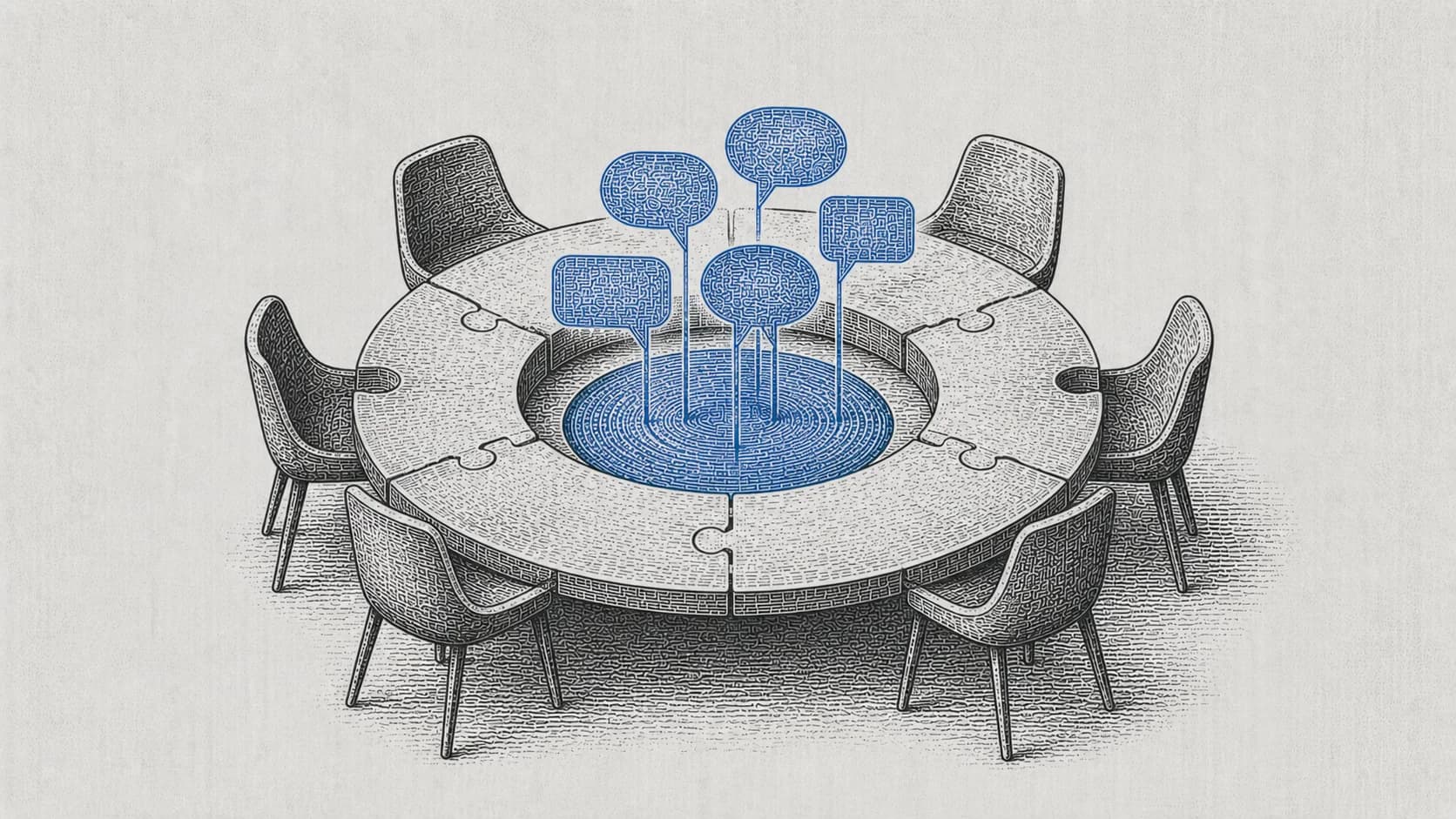
Founders are expected to talk to customers, investors, employees, and strangers before anyone teaches them how different those conversations actually are.
How to Talk to People: Strangers, Investors, Customers, and Your Own Employees brings that overlooked operating skill into a rapid-fire panel at Fabrik NYC on Thursday, August 13, 2026. Five speakers will deliver focused seven-minute talks before opening the room for audience questions.
The event is not framed as a generic networking class. Its subject is the human judgment required to communicate across situations where the incentives, power dynamics, and stakes are different.
About How to Talk to People
The speaker lineup includes Karen Kelly, Erin Essex, Joyce Shin, Corey Greenhouse, and Farzad Khosravi. Their backgrounds span small-business AI adoption, human-centered design, judgment and intuition, brand and growth leadership, product development, and go-to-market execution.
Each speaker will have seven minutes to make a focused argument before the conversation moves into Q&A. The compressed format asks every speaker to choose one idea rather than compress an entire career into a keynote.
The event also includes refreshments and a tasting from Si Señor Mezcal. Lawrence Krubner is listed as the host with Fabrik NYC. Krubner is the CTO of Scorealytics and organizes a recurring startup leadership event in New York.
Communication Is Not One Skill
“Good communicator” sounds like one portable trait. Founders quickly discover that the phrase hides several different jobs.
A customer interview requires curiosity and restraint. The founder has to learn without turning every question into a defense of the product. An investor conversation requires a credible account of opportunity, risk, evidence, and why the company can win. An employee conversation requires context, clarity, and the willingness to make a decision people can act on.
Talking to a stranger has a different threshold. The first goal is not to explain everything. It is to create enough mutual signal to know whether the conversation should continue.
Using the same language in every room creates predictable failures. Customers hear a pitch when they were supposed to be heard. Employees receive inspiration when they needed a decision. Investors receive product detail without a market thesis. Strangers receive an eight-minute monologue before learning why they should care.
The event matters because it treats those differences as operating questions rather than personality traits.
The Customer Conversation
Founders often enter customer discussions with the answer already formed. That makes it easy to ask questions that confirm the product instead of revealing the workflow.
A stronger conversation begins with what the customer is already doing, where time or money is being lost, which workarounds exist, and what would prevent change. The founder listens for behavior, not only enthusiasm.
This is especially important when AI is involved. A customer may like the idea of automation and still distrust the product with the decisive step. The founder needs to understand where the human wants assistance, where approval must remain visible, and what evidence would make the system credible.
The Investor Conversation
Investors need a story, but the story must carry risk as well as ambition.
The useful founder can explain why the market is changing, why the company is positioned to benefit, which assumptions remain unproven, and what the next round of work will establish. Overconfidence makes the opportunity sound brittle. Excessive caution makes the founder sound unconvinced.
The goal is not perfect certainty. It is a coherent view of what the founder knows, what the founder believes, and how the company will learn the difference.
That requires the founder to read the room without abandoning the thesis. Different investors care about different stages, sectors, and evidence. The founder should adapt the emphasis while keeping the company’s central logic intact.
The Employee Conversation
Employees experience founder communication as operating infrastructure.
A vague priority creates duplicate work. An unexplained change creates rumor. A decision without context can feel arbitrary even when it is correct. A founder who withholds difficult information in the name of protecting morale may create less trust than the information itself would have.
Clarity does not mean sharing every thought in real time. It means helping people understand what changed, why it changed, what remains uncertain, and what they should do next.
Listening matters here, too. Employees often see customer friction, technical risk, or cultural strain before it reaches the founder’s dashboard. Communication must move upward as well as downward.
The Operators Behind the Conversation
The panel brings together speakers with different approaches to human behavior and business execution. Karen Kelly works with non-technical small-business owners adopting AI. Erin Essex brings a design practice centered on behavior and empathy. Joyce Shin focuses on judgment, adaptability, and intuition as human advantages.
Corey Greenhouse brings experience across brand strategy, performance marketing, and company growth. Farzad Khosravi brings product, engineering, customer-success, and go-to-market experience from AI and software companies.
That mix gives the event a wider frame than public speaking. It connects communication to product design, leadership, sales, growth, and organizational trust.
What This Signals
As AI absorbs more routine communication, the remaining human interactions become more consequential. The ability to ask a better question, read a room, explain a risk, or make an employee feel informed cannot be reduced to generating more polished language.
Human communication is becoming less visible as a category and more important as an operating advantage.
The seven-minute format will not solve every difficult conversation. It can make the differences between them easier to see, which is the right place for a founder to begin.
Event Details
- Official event: How to Talk to People: Strangers, Investors, Customers, and Your Own Employees
- Date: Thursday, August 13, 2026
- Time: 6:00 PM to 8:00 PM EDT
- Location: Fabrik NYC, 12-16 Vestry Street, 4th Floor, New York, NY 10013
- Format: Five seven-minute talks followed by audience Q&A
- Hosted by: Lawrence Krubner and Fabrik NYC
- Access: Registration open
- Official page: Register on Luma
 Company Spotlight: LightSprint’s Shared Software Factory|LightSprint Raises $6.1M Seed for Product Team Collaboration|Forgepoint Company Spotlight: AI Inside the Factory Office|Forgepoint Raises $9.8M Seed for Manufacturing Quotes|
 Company Spotlight: Modal and the Infrastructure AI Runs On|Modal Raises $750M Series D for AI Execution Infrastructure|
 Labelbox Company Spotlight: Experts, Environments and Agents|Labelbox Raises $100M+ Series E for Horizon and AI Agents|
 Marklo: AI Campaign Planning Built for Shopify Brands|