


Wally Raises $25M to Scale Preventive Dental Care
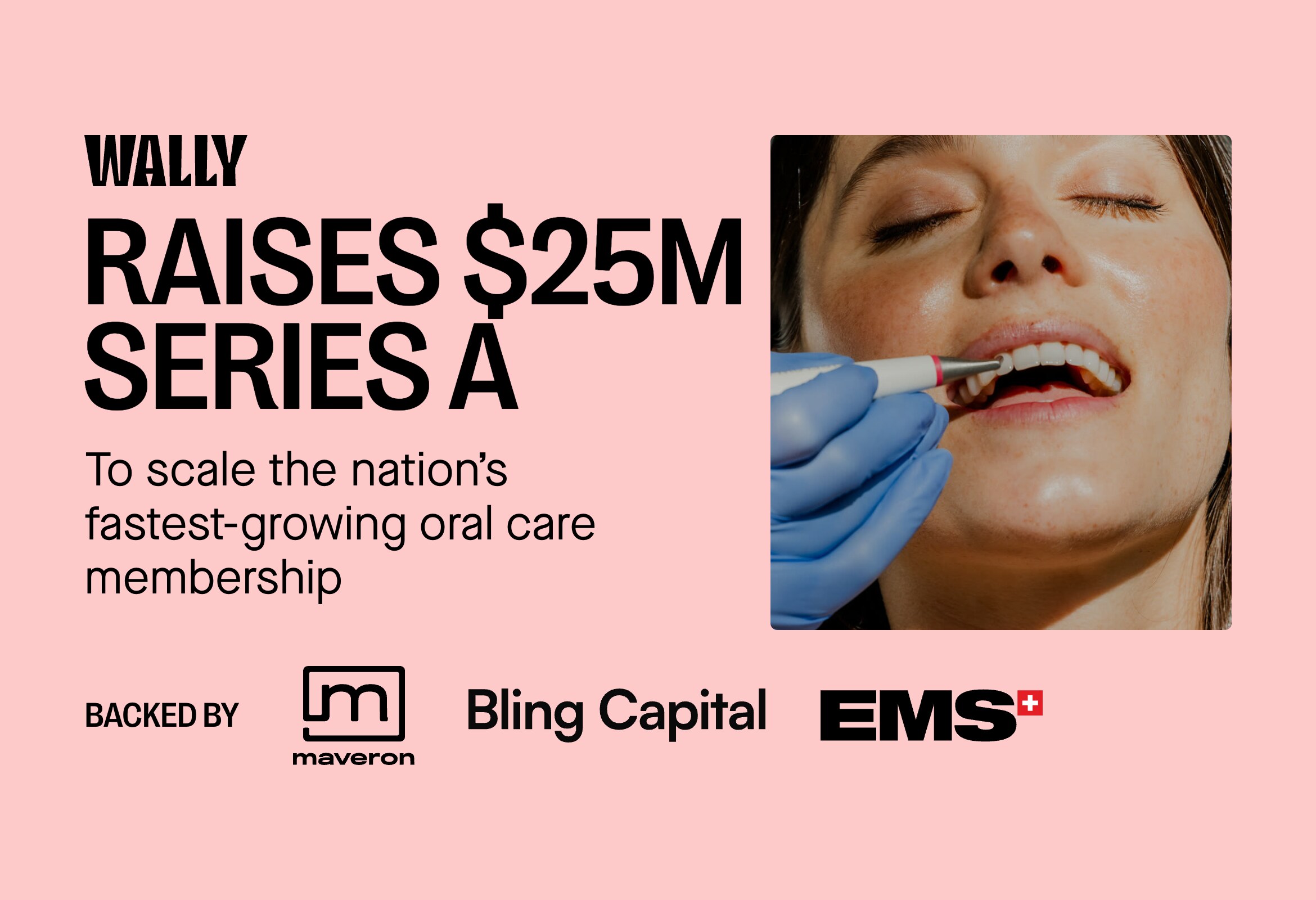
Wally has raised a $25M Series A to expand an insurance-free dental membership built around preventive care, predictable pricing, and a technology-assisted clinical workflow. Maveron led the round, with participation from Bling Capital and Hims co-founder Jack Abraham. Wally also announced a strategic partnership with EMS Dental.
The capital is meant to take Wally from 15 locations to 100 by the end of 2027, beginning with Washington, D.C., Atlanta, Austin, and Miami. That makes this financing more than a clinic-opening budget. It is a test of whether a subscription model can make preventive dentistry easier to use without letting clinical consistency deteriorate as the footprint grows.
What Wally Announced
Wally disclosed the financing on October 7, 2026. The New York-based company said the $25M Series A will support new locations, hiring across operating and clinical teams, and continued development of the software that coordinates scheduling, clinic operations, and clinical workflows. No valuation was disclosed.
The round follows Wally's earlier venture backing, including a $3M seed round reported in 2023. The new investor mix pairs Maveron's consumer-brand thesis with returning investor Bling Capital and Jack Abraham, whose company-building work includes Hims. Wally's announcement did not provide a verified total-funding figure, so the Series A should be treated as the confirmed new capital rather than folded into an estimated lifetime total.
The Business Model Behind the Round
Wally charges $249 per year for unlimited cleanings and diagnostics without requiring dental insurance. The membership includes preventive services and technology-assisted assessments, while products such as nightguards, whitening, and clear aligners are offered separately at stated prices. The model tries to move the economic relationship away from reimbursement for episodic procedures and toward a recurring preventive-care experience.
That matters because access remains uneven even when coverage exists. The American Dental Association's 2026 review of national data found that 41% of working-age adults visited a dentist in 2023, compared with 28% of people without dental insurance. Wally told Axios that about 60% of its customers are uninsured, but it also said some insured members pay directly because they prefer the membership experience.
What Members and Clinicians Actually Use
The operating stack combines Swiss AIRFLOW cleaning equipment and Guided Biofilm Therapy with digital X-rays, 3D intraoral scans, saliva testing, and AI-assisted detection. Wally says its software handles scheduling and clinic operations while guiding clinicians through appointments. The company also offers non-invasive treatments intended to address early-stage decay, although treatment suitability remains a clinical decision rather than a software promise.
Wally's prevention argument depends on frequency and trust. The company reports more than 50,000 members across 15 locations in New York City, Philadelphia, Jersey City, and Chicago, with members visiting an average of three times per year. It also reports a 4.9-star member rating and 97% hygienist retention. These are company-reported operating metrics, not independently audited clinical outcomes, but they show the behaviors Wally is trying to scale.
Why Maveron Led the Series A
Maveron describes its investment focus as consumer businesses that change how people live, work, learn, and stay well. Wally fits that lens because the product is not only a dental service. It is a consumer brand, a recurring membership, a physical retail footprint, a clinical workforce, and a software system that all have to deliver the same experience.
Maveron Chief Investment Officer and General Partner Jason Stoffer said Wally's combination of pain-free cleanings, faster appointments, diagnostics, and an AI-driven operating platform could support a durable consumer brand. The investor logic is clear enough: consumers already spend around a category they often dislike, and Wally is betting that a simpler price and a prevention-first experience can change how often they show up.
The Hard Part Is Operational Consistency
Growing from 15 sites to 100 compresses several difficult jobs into one plan. Wally has to open locations quickly, recruit and retain clinicians, standardize care, maintain regulatory compliance across markets, and ensure that software assists rather than distorts clinical judgment. A brand promise can travel instantly; a dependable clinical operation cannot.
The reported 97% hygienist-retention rate matters in that context because staffing shortages can break expansion plans before customer demand does. Wally's new partnership with EMS Dental also matters because the physical cleaning technology sits inside the service experience the company markets as less painful and more preventive. Scaling will require the hardware, training, software, and clinical standards to arrive together.
What the Funding Changes
The Series A gives Wally resources to build density beyond its initial Northeast markets and Chicago. The company plans to enter Washington, D.C., Atlanta, Austin, and Miami, while hiring operational leaders and clinicians. Axios also reported that Wally intends to keep investing in its AI platform as it expands.
The financing therefore increases both reach and obligation. Every new studio creates another chance to prove that a low-friction membership can bring people back for preventive care, but it also creates another place where inconsistent staffing, scheduling, diagnosis, or follow-through could weaken the model. Wally's next phase will be measured less by the speed of openings than by whether the fiftieth and hundredth locations can preserve the trust that made the first 15 worth expanding.
What This Signals for Consumer Health
Consumer health companies increasingly combine a recurring payment, software, physical service delivery, and a recognizable brand. That combination can remove friction for patients, but it does not erase the work of clinical operations. Wally's round shows investors are still willing to fund models that challenge insurance-mediated access when the company can point to repeat use, membership growth, and an operating system designed for scale.
The more useful signal is not that every dental practice should become a subscription. It is that preventive care becomes more valuable when the economics reward repeat engagement before a problem turns into a procedure. Wally now has the capital to take that idea into more cities, where each appointment will add evidence about whether the membership can remain affordable, clinically credible, and consistent at national scale.
Frequently Asked Questions
How does Wally's dental membership work?
Wally charges $249 per year for unlimited cleanings and diagnostics without requiring dental insurance. Members also receive access to technology-assisted assessments, while products such as nightguards, whitening, and clear aligners are priced separately.
Why did Wally raise a $25M Series A?
Wally plans to use the capital to expand from 15 locations to 100 by the end of 2027, hire operational leaders and clinicians, and continue developing its software platform. The first named expansion markets are Washington, D.C., Atlanta, Austin, and Miami.
What makes Wally different from a traditional dental practice?
Wally combines an insurance-free membership with preventive services, standardized clinic operations, and software-assisted diagnostics and scheduling. Its model is designed around repeat preventive visits and predictable pricing rather than insurance reimbursement for episodic procedures.
What traction has Wally reported?
Wally reports more than 50,000 members across 15 locations, an average of three member visits per year, a 4.9-star rating, and 97% hygienist retention. These figures are company-reported and should not be treated as independently audited clinical outcomes.
What should healthcare operators watch as Wally expands?
The central question is whether Wally can preserve clinical quality, staffing consistency, and patient trust while opening locations rapidly across new markets. Its 100-location plan will test whether the software, hardware, training, and local operating model can scale together.
Where the Money Moved
The intelligence briefing of the innovation economy. Funding, M&A, debt and fund closes, read as market signal rather than deal announcements.
Subscribe to Where the Money Moved