




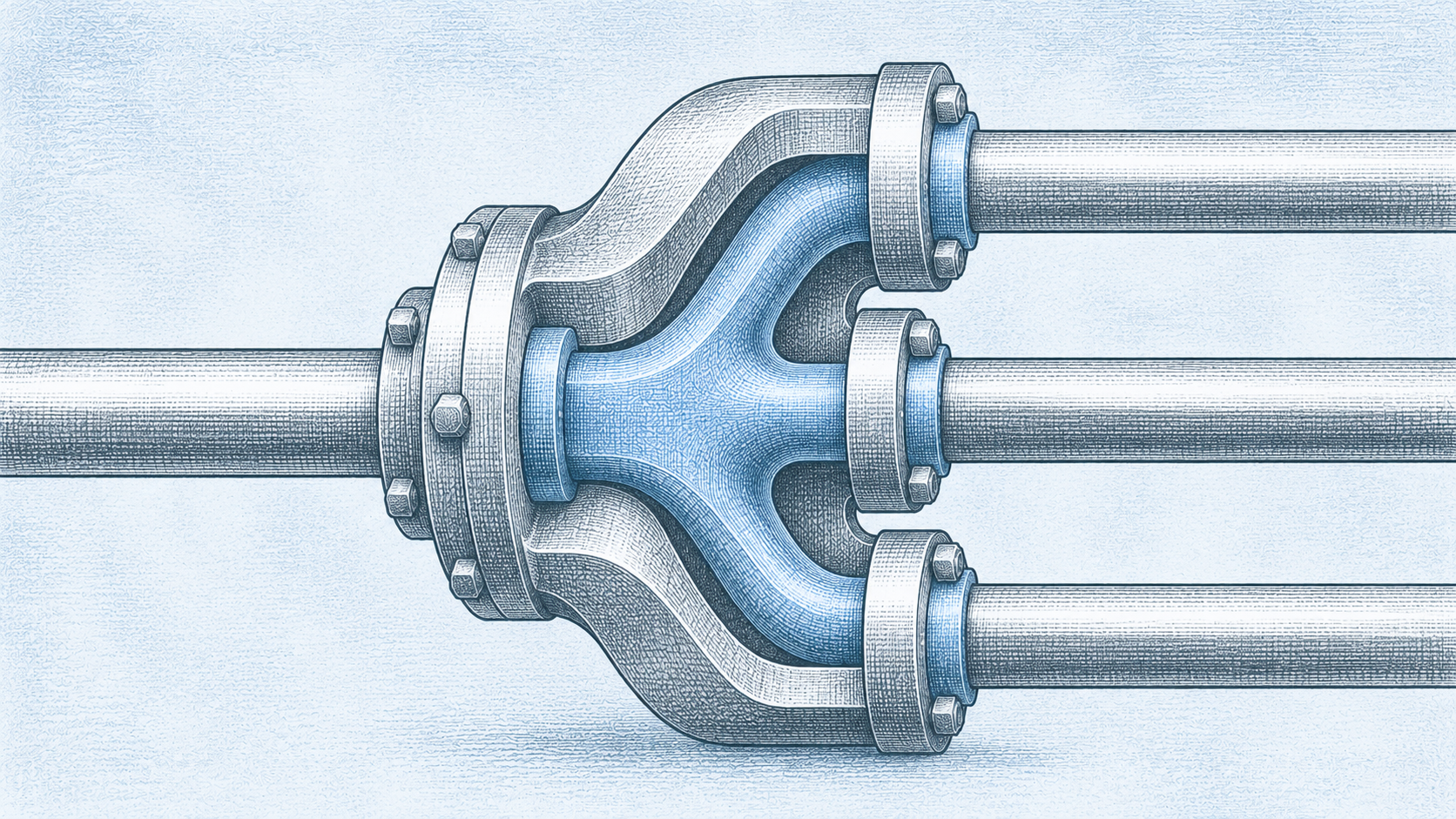

Mosaico Raises €7.5M Seed for Robotics Data Infrastructure
Gabriele Lini has drawn a boundary around the search technology his own company sells. The Mosaico CEO argues that retrieving a scene resembling a robot's failure can help an engineer investigate, while the eventual safety conclusion still needs traceable evidence. That distinction gives the Italian startup's latest financing a practical buyer: the team responsible for explaining a machine's behavior.
Mosaico's €7.5M Seed round, reported on November 16, 2026, is led by United Ventures, with OpenOcean and existing investor Connect Ventures participating. The financing supports product development, global open-source distribution and planned US expansion. For robotics and physical-AI developers, the proposition is infrastructure that makes sensor recordings easier to use while keeping the data inside their own environment.
Mosaico's seed round finances a focused data business
The founding team has chosen a narrow responsibility inside a sprawling engineering assignment. CEO Gabriele Lini, CTO Federico Cabassi and CSO Francesco Di Corato are building the layer that organizes recordings and returns useful data to developers. Their company sits underneath the work of training, investigating and improving robots, giving it a reason to serve teams building different machines.
Connect Ventures' portfolio record independently connects all 3 founders to the exact company domain and identifies Italy as its location. Mosaico's own team page lists experience at Ambarella and Magneti Marelli. The relevant continuity is the founders' familiarity with autonomous systems and the supporting data work, rather than a claim that a financing announcement makes their software an industry standard.
Startups Magazine puts Mosaico's cumulative funding at €8.5M, including an earlier €1M pre-seed. The new money gives a business rooted in Emilia-Romagna resources to develop its product and reach more developers overseas. The reported expansion is a plan, with the US named as a destination; no new American office or completed market rollout is established by the announcement.
That focus matters commercially. A data supplier can become part of several robotics programs without having to sell the robot itself. It also inherits a demanding obligation: the information must remain useful as the customer's sensors, software and development questions change.
The value lives in recordings engineers can use again
Mosaico's technical documentation describes a structured archive for streams generated by different sensors. An ontology defines the data's type and meaning, a topic holds a time series, and a sequence groups related streams from a recording session. Those relationships let context travel with the measurements instead of relying entirely on a folder name or the recollection of the person who collected them.
An engineering team can then ask a more specific question of its recordings. A timestamp, a physical measurement and the circumstances of a session become ways into the archive. The commercial importance is the distance between having collected information and being able to return to it with a new development question.
Lini's September account of data-pipeline failures explains how that distance opens. He describes teams discovering recordings they can no longer use because calibration context is missing, old parsers fail or data has been deleted. These are the founder's observations from his work in the field, and they explain why a seemingly modest storage decision can become expensive later.
For a robotics manager, that makes the buying decision partly about continuity. Reusing a field recording means preserving the conditions that made it interpretable, then maintaining a path back into it. Mosaico's opportunity lies in taking responsibility for that recurring work while the customer's engineers concentrate on what the machine should do.
A search result has to survive the next question
In his October essay on semantic search, Lini describes a hybrid approach: structured constraints narrow the candidate recordings, and vector similarity ranks what remains. The architecture follows an engineering distinction between discovering potentially relevant material and establishing a precise, reproducible basis for a conclusion.
That choice puts some discipline around an appealing product demonstration. Asking for a scene in ordinary language can make a large archive easier to explore. The person reviewing a failure still needs to know which conditions were applied and why the selected interval belongs in the investigation. Mosaico's own explanation treats discovery as part of a larger evidence process.
The public code repository offers another point of inspection. It contains the Python SDK and Rust backend under an Apache-2.0 license, allowing developers to examine the software behind the product description. The availability of code gives a technical team a way to evaluate fit before committing to a broader supplier relationship.
For Mosaico, that relationship can develop around enterprise support and controls added to a freely available foundation. Local deployment also gives organizations a path to evaluate the infrastructure while retaining their recordings. The €7.5M round finances the work of extending that proposition across more developers and markets, with a particularly consequential customer still in view: the engineer who has found the relevant recording and now needs to explain what it establishes.
Frequently Asked Questions
Why does a robotics team need more than a folder of sensor recordings?
Different sensors produce streams that must remain interpretable together. Mosaico organizes those streams with typed models and session context so engineers can retrieve relevant data for analysis and training.
How does Mosaico combine semantic search with engineering evidence?
Mosaico describes applying structured constraints before ranking candidate recordings by vector similarity. CEO Gabriele Lini distinguishes finding a relevant scene from establishing the traceable basis for a safety conclusion.
How can an open-source Mosaico deployment become a commercial relationship?
Engineers can use the open-source foundation on their own infrastructure. Mosaico offers commercial support and enterprise controls around that foundation, giving organizations a reason to pay as their operational requirements grow.
What work is the new seed financing intended to support?
November 16 reporting identifies product development, broader global open-source distribution and planned US expansion. Those are intended uses of capital, rather than evidence that the expansion has already been completed.
Where the Money Moved
The intelligence briefing of the innovation economy. Funding, M&A, debt and fund closes, read as market signal rather than deal announcements.
Subscribe to Where the Money Moved