

Topdog Builds the Live Multiplayer Layer for Skill Gaming
Topdog is a real-money skill-gaming app built around live competition between people, not a player submitting a score into an empty machine. The app is operated by Toast Studios, Inc., the same company that licenses multiplayer games, shared liquidity, and operating infrastructure to real-money gaming operators.
Co-founders Aman Agarwal and Jatin Narang started Toast Studios in 2024, according to investor Lightspeed India Partners. Avinash Srivastava is the company's verified CTO. Together, the team is attacking a problem that looks like game design from the outside but behaves like a live marketplace underneath: the right second player has to show up before the first one leaves.
That is why Topdog matters now. Mobile games have no shortage of polished interfaces, reward loops, or payment rails. Synchronous skill gaming has a colder constraint. A great game with weak player density can still feel broken, because every match requires another human with a compatible skill level, stake, and free minute.
Topdog is the consumer side of Toast Studios
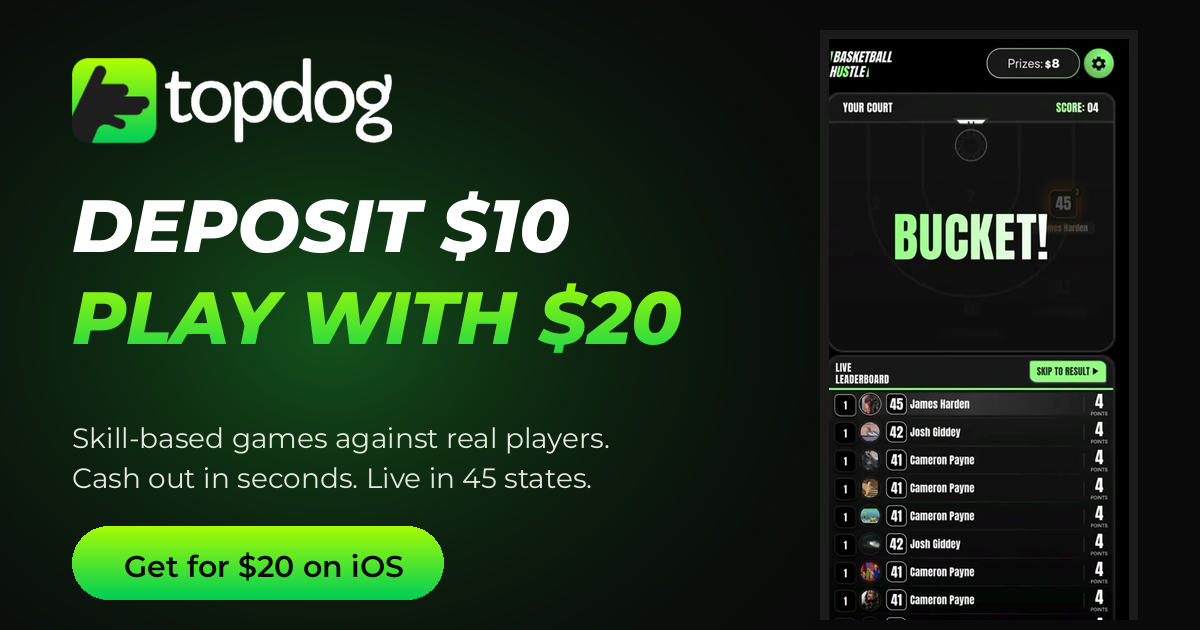
Topdog offers short 1-on-1 and multiplayer contests through an iPhone app. Its current catalog includes 21 Hustle, Basketball Hustle, Pinfall, Tilt, and 21 Royale, spanning cards, sports, and strategy. The product says outcomes are determined by player decisions and explicitly positions itself as a skill-gaming platform rather than a casino.
The consumer app is only one side of the company. Toast Studios also licenses strategy-first games to operators and offers a white-label platform. The official site says partners can integrate through three APIs, configure games and lobbies, manage fees and rewards, review player and revenue data, and use a shared player pool rather than building liquidity from zero.
That combined model gives Toast Studios something many game suppliers lack: a first-party environment where it owns the entire operating loop. Topdog lets the team run game design, matchmaking, payments, fraud controls, customer support, and live operations together. The B2B platform then turns those lessons into infrastructure other operators can use.
Player liquidity is the product beneath the product
Toast Studios describes its games as synchronous and turn-by-turn. That design changes the feeling of competition because a player can react to an opponent instead of completing a session alone and comparing scores later. It also raises the operational burden. The network has to produce a suitable match quickly, keep contests fair, handle money reliably, and give both people a reason to come back.
The company has built its stack around that burden. Its official About page lists server-backed games, skill-matched matchmaking, global liquidity, operator controls, and end-to-end operational support. Topdog's terms add age and location checks, player-funds controls, and prohibitions on bots and collusion. Those systems are not background plumbing. They decide whether a clever game becomes a repeat habit or a lobby people stop opening.
This is also why a broader catalog is both an opportunity and a risk. More games create more reasons to play, but they divide players across titles, entry amounts, skill bands, and time windows. The company has to grow participation and choice together. Otherwise, every new game becomes one more room waiting for someone to walk in.
The founders bring gaming experience from both sides
The company's public story combines gambling behavior and free-to-play product experience. In a March 2025 BettingStartups interview, Agarwal and Narang described Toast's origin as a collision between those two backgrounds and explained why they believed live multiplayer could fill a gap in the U.S. skill-gaming market.
Toast Studios' current team page lists Agarwal as a Co-Founder with three patents filed in skill-gaming mechanics. It lists Narang as a Co-Founder who scaled a skill-gaming business to $72M, and Srivastava as CTO with experience as a founding engineer at a major casual skill-gaming company. These are company-described credentials, not independently audited performance claims, but the mix is relevant: game mechanics, consumer retention, and systems engineering all have to survive the same live match.
The leadership roster is intentionally kept narrow here. Current primary sources verify the two co-founders and CTO, but do not establish a CEO title. Topdog has also not published a detailed headcount, benefits program, or open-role list. A Careers & partnerships section leads to a general contact form, not a verified jobs board, so there is no responsible basis for calling the company actively hiring.
Topdog has early traction, with important caveats
Topdog's website currently reports real-money availability in 45 states and more than $10M paid to players across matches, tournaments, and rewards. Apple's App Store showed a 4.6 rating across roughly 1,300 ratings during research. Those are useful signs of consumer activity, but they are company and platform-reported figures, not audited measures of revenue, retention, or unit economics.
The company has disclosed $4.1M in total funding. A $1.6M pre-seed from Lightspeed preceded a $2.5M Seed round led by Boston Seed Capital, with The Raine Group, Bullpen Capital, Versus Ventures, Spoondrift Capital, and Permit Ventures participating. Topdog says the new money will support user acquisition and more sports, card, and strategy games.
That use of funds reveals the company thesis. In most consumer apps, acquisition is a way to fill the top of the funnel. In a synchronous game network, each active player can also improve match availability for everyone else. Marketing spend, retention, game design, and infrastructure are tied together because growth has to make the room feel fuller, not merely make the download chart look better.
What Topdog signals for skill gaming
Topdog is testing whether real-money skill games can carry the immediacy of multiplayer videogames without depending on an outside sporting event or a house-banked casino model. The customer is not just choosing a title. The customer is trusting the platform to find a fair opponent, move money correctly, enforce the rules, and make another match available when the first one ends.
Toast Studios' two-surface model makes that test more consequential. Topdog can supply direct operating evidence. The B2B platform can distribute games and liquidity across partners. If the loop works, every new participant and operator can make the network more useful. If it does not, the company will have built more doors into the same empty room.
The next proof points are practical and unforgiving: repeat play, balanced matchmaking, reliable payments, responsible access, and enough player density to keep an expanding catalog alive. Topdog does not need to win an argument about whether skill gaming is interesting. It needs to make the second seat appear so consistently that the player never thinks about the machinery underneath it.
Gaming funding, last 30 days
DevCuration's funding database tracked 2 Gaming rounds totaling $14.5M in disclosed capital over the past 30 days. Recent deals we covered:
- Topdog Raises $2.5M for Real-Time Skill Gaming$2.5M · Sep 23
- Burlingame Studios Secures $12M for UA Growth$12M · Sep 4
Frequently Asked Questions
What is Topdog?
Topdog is an iPhone skill-gaming app operated by Toast Studios, Inc. It offers short, real-money 1-on-1 and multiplayer contests in which people compete directly against other players.
Who founded Topdog and Toast Studios?
Aman Agarwal and Jatin Narang are the verified co-founders of Toast Studios, the company that operates Topdog. Avinash Srivastava is the company's verified CTO.
How does Toast Studios make money?
Toast Studios operates the Topdog consumer app and also licenses multiplayer games, shared player liquidity, operator controls, and white-label infrastructure to real-money gaming operators. The company has not disclosed detailed revenue figures.
Why does player liquidity matter to Topdog?
Topdog's games are synchronous, so each contest needs compatible players to be available at the same time. Greater player density can improve match availability across games, skill levels, stakes, and time windows.
How much funding has Topdog raised?
Topdog has disclosed $4.1M in funding: a $1.6M pre-seed backed by Lightspeed Venture Partners and a $2.5M Seed led by Boston Seed Capital.
Is Topdog hiring?
No verified jobs page, open-role list, or specific hiring plan was found. Toast Studios has a general careers and partnerships contact path, but DevCuration found no basis to describe the company as actively hiring.
Where the Money Moved
The intelligence briefing of the innovation economy. Funding, M&A, debt and fund closes, read as market signal rather than deal announcements.
Subscribe to Where the Money Moved