







Latest
Sierra x Acquired NYC: Bret Taylor on the AI ParadoxSierra x Acquired NYC: Bret Taylor on the AI Paradox|Clair Health Raises $11.6M Seed to Bring Continuous Hormone Monitoring Into the Wearable EraClair Health Raises $11.6M Seed to Bring Continuous Hormone Monitoring Into the Wearable Era|Orthogonal Raises $4.3M Seed to Build the Infrastructure Layer for AI AgentsOrthogonal Raises $4.3M Seed to Build the Infrastructure Layer for AI Agents|Tugboat Raises $3M Seed Round as Insurance Claims Become a Climate-Era ProblemTugboat Raises $3M Seed Round as Insurance Claims Become a Climate-Era Problem|fomo Raises $75M Series B as Social Trading Moves Mainstreamfomo Raises $75M Series B as Social Trading Moves Mainstream|DropGenie’s Seed+ Round Signals a New Era for Primary-Cell Drug DiscoveryDropGenie’s Seed+ Round Signals a New Era for Primary-Cell Drug Discovery|HistoSonics Raises $250M in Growth Financing as Histotripsy Moves Into the MainstreamHistoSonics Raises $250M in Growth Financing as Histotripsy Moves Into the Mainstream|Upscale AI Raises $190M Series A at a $2B Valuation as the Battle for AI Networking Heats UpUpscale AI Raises $190M Series A at a $2B Valuation as the Battle for AI Networking Heats Up|Nura Bio Raises $73.8M Series B to Advance SARM1 NeuroprotectionNura Bio Raises $73.8M Series B to Advance SARM1 Neuroprotection|Vedana Therapeutics Raises $46M Series A to Advance Next-Generation Migraine TherapiesVedana Therapeutics Raises $46M Series A to Advance Next-Generation Migraine Therapies|Sierra x Acquired NYC: Bret Taylor on the AI ParadoxSierra x Acquired NYC: Bret Taylor on the AI Paradox|Clair Health Raises $11.6M Seed to Bring Continuous Hormone Monitoring Into the Wearable EraClair Health Raises $11.6M Seed to Bring Continuous Hormone Monitoring Into the Wearable Era|Orthogonal Raises $4.3M Seed to Build the Infrastructure Layer for AI AgentsOrthogonal Raises $4.3M Seed to Build the Infrastructure Layer for AI Agents|Tugboat Raises $3M Seed Round as Insurance Claims Become a Climate-Era ProblemTugboat Raises $3M Seed Round as Insurance Claims Become a Climate-Era Problem|fomo Raises $75M Series B as Social Trading Moves Mainstreamfomo Raises $75M Series B as Social Trading Moves Mainstream|DropGenie’s Seed+ Round Signals a New Era for Primary-Cell Drug DiscoveryDropGenie’s Seed+ Round Signals a New Era for Primary-Cell Drug Discovery|HistoSonics Raises $250M in Growth Financing as Histotripsy Moves Into the MainstreamHistoSonics Raises $250M in Growth Financing as Histotripsy Moves Into the Mainstream|Upscale AI Raises $190M Series A at a $2B Valuation as the Battle for AI Networking Heats UpUpscale AI Raises $190M Series A at a $2B Valuation as the Battle for AI Networking Heats Up|Nura Bio Raises $73.8M Series B to Advance SARM1 NeuroprotectionNura Bio Raises $73.8M Series B to Advance SARM1 Neuroprotection|Vedana Therapeutics Raises $46M Series A to Advance Next-Generation Migraine TherapiesVedana Therapeutics Raises $46M Series A to Advance Next-Generation Migraine Therapies
Back to Events
Webinar
WP Intelligence Brings America’s AI Health Care Reckoning to AI+ Expo

WP Intelligence Brings America’s AI Health Care Reckoning to AI+ Expo

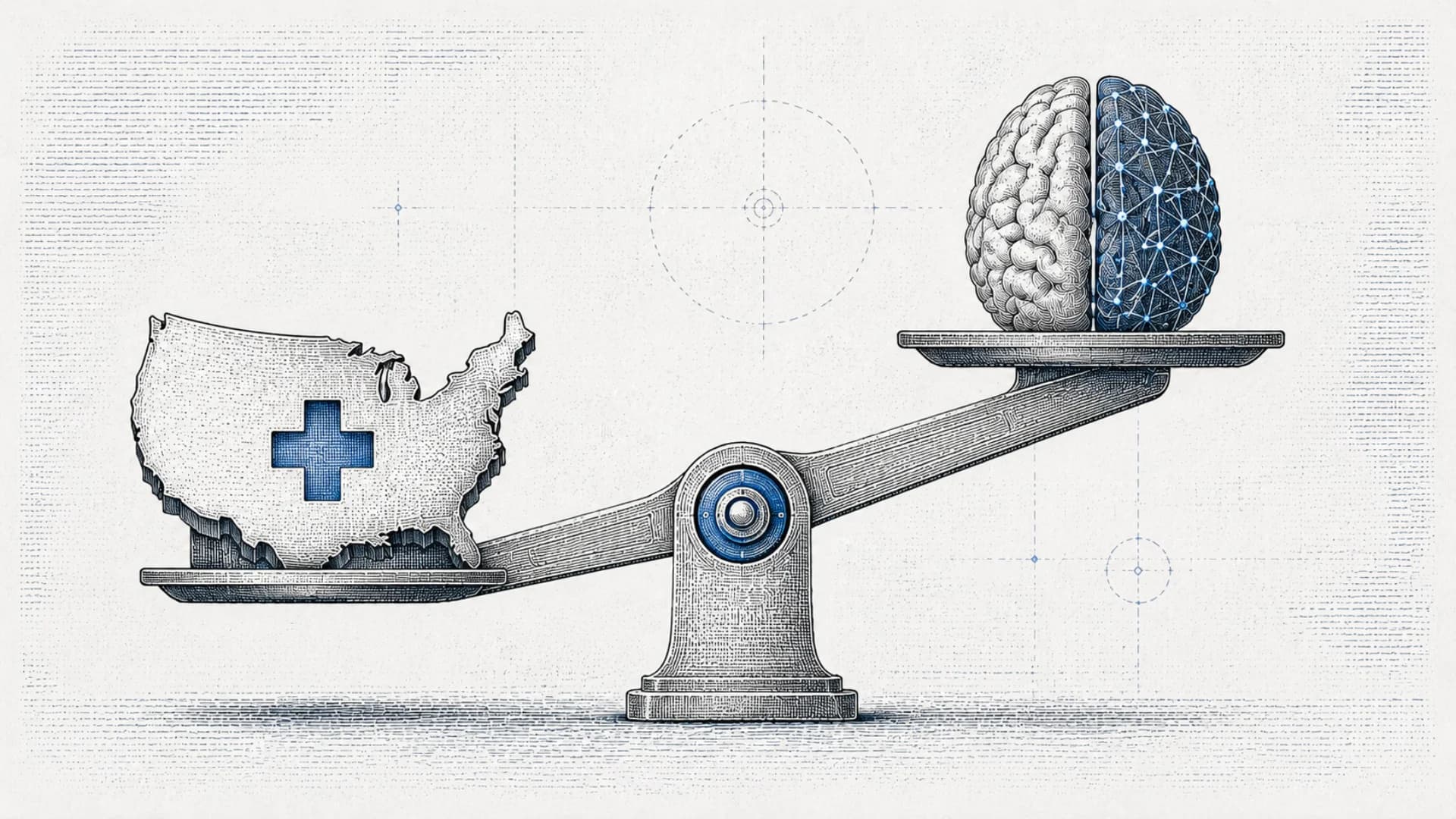
American health care is entering the kind of transition that makes incumbents sweat quietly in boardrooms and founders talk a little too fast at dinner. Medical record sharing. Drug discovery. Pharmacy infrastructure. Claims processing. Clinical workflows. The whole machine is getting new wiring while most people are still arguing about whether ChatGPT can write a decent wedding toast. Meanwhile, operators, regulators, and security leaders are staring at something much bigger: who controls the intelligence layer of care when every hospital, insurer, pharmacy, and federal agency starts speaking algorithm fluently.

That’s why today’s WP Intelligence “How AI is changing health care” briefing at AI+ Expo in Washington matters. Not because AI in health care is a trendy headline. That phase already burned off. This room exists because the stakes got real. Cost pressure is real. Physician burnout is real. Cybersecurity threats are real. Regulatory uncertainty is real. Everybody wants faster care, cleaner data, lower costs, tighter margins, better outcomes, and somehow fewer lawsuits. America wants Star Trek medicine while operating on fax machine infrastructure and passwords written on sticky notes. That tension is exactly where this conversation lives.

Today, in Washington, D.C., WP Intelligence drops directly into the middle of that collision with Luiza Savage moderating and Rebecca Adams leading a conversation with people carrying actual institutional weight. Thomas Keane, MD, National Coordinator for Health Information Technology, sits at the nerve center of how health data moves across the country. Alan Rosa, SVP and chief information security officer at CVS, understands better than most that every advancement in AI creates another front door hackers would love to kick open. Janet Woodcock, MD, former acting commissioner of the U.S. Food and Drug Administration, has spent years navigating the uncomfortable space between innovation and public trust, which is basically the entire health-tech economy right now in one sentence.

That mix matters. This isn’t founders pitching calorie-counting apps to people wearing fleece vests near a kombucha station. This is policy, infrastructure, security, regulation, commerce, and medicine sitting at the same table while the industry decides whether AI becomes a force multiplier or a very expensive hallucination with a medical license. Good tech news explains products. Important tech news explains power. This conversation sits firmly in the second category.

The smartest people in health care aren’t asking whether AI is coming. They’re asking who gets protected, who gets displaced, who gets reimbursed, and who gets left buffering while the rest of the system accelerates. That’s the real room. That’s the real conversation. And increasingly, that’s where the future of American business is being negotiated. The next wave of tech news will not be driven by consumer novelty alone. It will be shaped by whoever earns institutional trust fast enough to operate inside industries where mistakes carry human consequences.