Traditional data infrastructure is running into a problem Silicon Valley spent years pretending could be solved with another dashboard, another orchestration layer, another “modern data stack” diagram that looked like a subway map designed during a caffeine relapse. The pressure now is operational. Real-time inference. Streaming analytics. Vector workloads. High-concurrency transactions. Enterprises are discovering that systems built to explain yesterday’s business are struggling to support decisions happening live inside the machine layer itself.
That tension sits directly underneath VAST Data’s upcoming webinar, “Beyond the Data Warehouse: Building AI-Ready Analytics with the VAST DataBase.” The session is part of the company’s 8-part “From Data to AI” technical series focused on analytics and AI infrastructure running on the VAST Data AI Operating System. The webinar matters because VAST Data is not simply arguing for a better warehouse. The company is making a much larger claim: the traditional warehouse category itself may no longer make architectural sense in the AI era. That is a very different conversation.
About “Beyond the Data Warehouse”
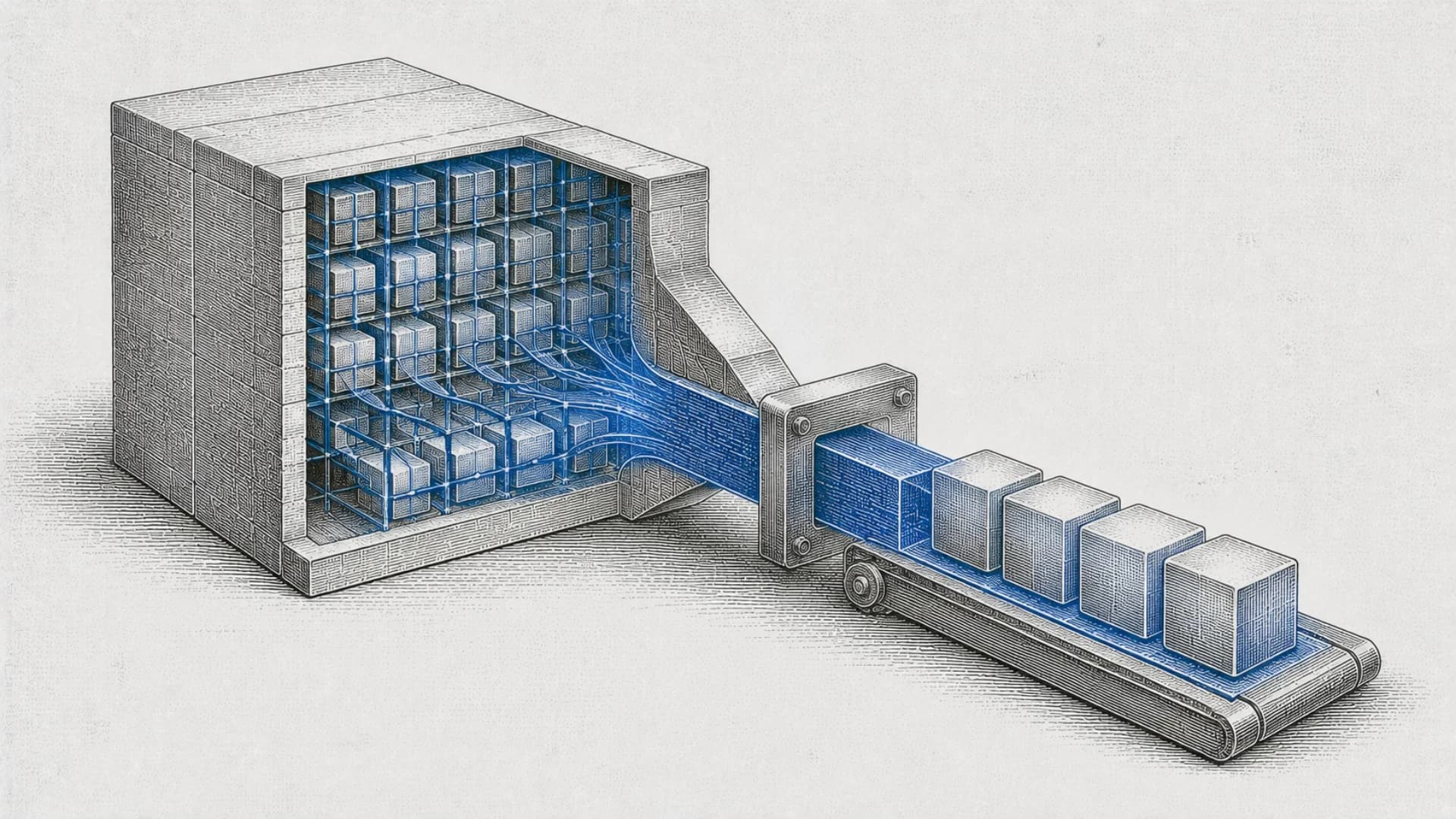
VAST Data’s webinar focuses on the limitations of traditional warehouse and lakehouse architectures built around object storage and external metadata layers. According to the company, those architectures introduce latency, serialization, and operational complexity that become increasingly problematic under AI-scale workloads. The session will explore how the VAST DataBase approaches hybrid transactional and analytical processing, commonly known as HTAP, through a unified architecture combining row and column optimization, sorted tables, and storage-layer performance tuning.
The core thesis is simple enough to make incumbent vendors uncomfortable: enterprises should not need separate systems for operational databases, analytics platforms, vector systems, and streaming infrastructure. For years, enterprise data teams assembled sprawling stacks that looked impressive in architecture diagrams and terrifying in practice. One system handled transactions. Another handled analytics. Another handled streaming. Another handled vector search. Then came the middleware glue, the synchronization pipelines, the governance tooling, the observability layer, and eventually the existential dread. At some point the “modern stack” started resembling a Home Depot receipt with Kubernetes. VAST Data is arguing for consolidation, and that matters because infrastructure markets historically reward simplification once complexity costs become visible enough inside CFO spreadsheets.
Why VAST Data Matters Right Now
VAST Data enters this conversation with unusual momentum. The company recently reached a $30B valuation following a $1B Series F round involving investors including Nvidia. VAST Data has also reported more than $4B in cumulative bookings, placing the company in a different operational category than most infrastructure startups still living off conference-stage optimism and synthetic ARR narratives.
The broader market context matters here. Enterprise AI adoption has shifted from experimentation toward operational deployment. That transition changes infrastructure requirements dramatically. Training a proof-of-concept model inside a sandbox environment is one thing. Running production AI systems against live enterprise data is another entirely. That second phase exposes architectural debt fast. Gartner has warned organizations lacking AI-ready data infrastructure risk seeing major AI initiative failure rates climb sharply through 2026. IBM has similarly identified fragmented enterprise data environments as one of the primary constraints limiting AI scalability. Those warnings are starting to land differently inside boardrooms because the spending is no longer theoretical. Enterprises already bought the GPUs. Now they are discovering the surrounding infrastructure was never designed for the traffic.
Fouad Teban and the Credibility Problem in Enterprise Infrastructure
One reason this VAST Data session carries weight is the presence of . Enterprise infrastructure audiences have developed extremely sensitive radar for theoretical operators. The market is flooded with people explaining systems they have never personally deployed at scale. Infrastructure buyers know the difference immediately. They can smell PowerPoint cologne from across the hallway.
Fouad Teban spent years inside the legacy analytics ecosystem through Vertica before joining VAST Data. That background changes the framing. This is not a futurist explaining why warehouses are outdated. This is someone who helped enterprises build large-scale analytics environments explaining where those architectures begin to fracture under modern AI demands. That distinction matters because enterprise infrastructure transitions rarely happen through hype alone. Operators move when pain becomes measurable. Latency becomes measurable. Pipeline sprawl becomes measurable. Data duplication becomes measurable. Engineering fatigue becomes measurable too, although companies usually wait until senior platform teams begin quietly updating LinkedIn profiles before acknowledging that one.
Why the Warehouse Debate Is Actually About Power
The warehouse conversation sounds technical on the surface, but underneath it sits a larger power shift happening across enterprise infrastructure. Historically, the warehouse acted as the center of gravity for analytics. Data moved into the warehouse. Queries ran against the warehouse. Business intelligence flowed outward from the warehouse. AI changes that model because modern AI systems increasingly require live operational context instead of delayed analytical snapshots.
That shift compresses time. It also collapses layers. Systems built around batch synchronization and delayed ingestion begin looking structurally outdated once AI workloads demand simultaneous transactional and analytical behavior against constantly changing datasets. This is where VAST Data’s HTAP positioning becomes strategically important. The company is effectively arguing that AI infrastructure markets will reward unified architectures capable of supporting operational transactions, analytics, vector operations, and streaming behavior simultaneously. If correct, that would pressure multiple adjacent infrastructure categories at once. Not just warehouses. Potentially portions of the broader lakehouse, vector database, and streaming ecosystem as well. That is why sophisticated operators are paying attention before this webinar even happens.
What This Signals About the Infrastructure Market
The VAST Data webinar reflects a broader market transition already underway across enterprise infrastructure. Infrastructure conversations are moving away from isolated product categories and toward integrated operational systems optimized for AI-native workloads. That shift benefits companies capable of collapsing architectural layers. It pressures vendors whose business models depend on fragmentation.
The timing also reflects something psychologically important happening across enterprise technology leadership: patience is disappearing. CTOs spent years tolerating infrastructure complexity because the tradeoff felt manageable during slower analytics cycles. AI acceleration changed the economics. Delayed pipelines now directly affect model performance, operational responsiveness, and infrastructure costs. The old compromises stopped feeling clever. Now they feel expensive.
 RSYNQ Raises $2M From Kanaden for Physical AI in Japan|Homa Raises $5M Seed for AI Homebuying and Mortgages|Origin Emerges With $20M Total for Construction Robots|
 Kutlerri.ai Raises $4M for Restaurant AI Sales Agents|
 AIsa Completes Seed Extension, Total Funding Tops $9M|Sharp Performance Raises $18M for First Responder Coaching|Molagri Announces $5.8M for Precision Biopesticides|Opsin Raises $21M for Enterprise AI Agent Security|Chariot Claims Raises $10M Series A for Consumer Arbitration|Sunbound Raises $24M Series A and Acquires Richter|