The Stripe AI Monetization Community is bringing finance and revenue leaders at scaling AI companies to a private dinner in New York on November 11, 2026. The gathering runs from 6:00 to 8:30 p.m. Eastern at Cuerno, with Schematic presenting and Schematic and Dealops partnering on a discussion about usage pricing, credits and complex enterprise deals.
The business question stretches beyond the restaurant: how does an AI company make its pricing promise hold together from the sales conversation to actual consumption? The dinner's agenda puts finance and revenue in the same conversation about that work. Its deliberately small format offers a place to compare operating choices before those choices become another customer's contract.
The official event listing currently shows registration as full, with a waitlist available. This is an upcoming, in-person discussion, with no announced speaker program or promised business outcomes. The opportunity is a focused exchange among people responsible for turning AI usage into an understandable commercial relationship.
AI pricing carries a promise across teams
A credit is easy to print on a pricing page. Explaining exactly what it buys, how quickly it can be consumed and what happens when the balance runs out requires decisions across several teams. A buyer needs enough visibility to make a spending decision, while the seller needs a model that fits the service being delivered.
That is why the dinner's combination of usage pricing and enterprise deal execution deserves attention. A usage model creates questions for the product, the quote and the invoice at once. If the contract offers an exception, someone must determine how that exception will be represented and enforced when the customer starts using the product.
Consider the questions an operator could bring to this discussion. Which activity counts toward a customer's allowance? Who explains a change in consumption? How should a credit commitment interact with a limit negotiated during procurement? These are analytical examples of the choices surrounding the stated agenda, rather than additional sessions announced by the organizers.
Finance and revenue leaders may approach those choices from different starting points. Bringing their reasoning into the same conversation can expose assumptions that otherwise remain buried in separate documents. A dinner focused on pricing gives those assumptions a concrete subject, especially when the next deal asks for terms the standard package never anticipated.
Schematic and Dealops cover connected operating work
Schematic describes its product around usage-based billing, metering, credit balances and entitlements, the rules controlling a customer's access. Its public positioning also emphasizes visibility and controls inside the product. That gives the company a direct relationship to the practical question of how a pricing decision becomes something a customer can use and understand.
Dealops describes its software as CPQ, or configure, price and quote, for complex and usage-based revenue. Its product materials cover combinations of credits, usage, commitments and other pricing structures, along with renewals and amendments. The company's role in this dinner therefore reaches into the commercial negotiation that precedes the billing experience.
Together, those product descriptions trace a useful path for discussion. A revenue team assembles terms a buyer will accept, while the product and billing environment must carry those terms forward. The editorial significance is the connection between these responsibilities; the event itself has not yet produced a case study, partnership announcement or measurable result.
For a scaling AI company, a conversation spanning those responsibilities can be more useful than debating a pricing label in isolation. Calling a package credit-based leaves plenty unresolved about the customer's experience. The people responsible still have to decide how the agreement behaves during actual use, when an allowance changes and when the relationship reaches renewal.
The hosts and the value of a smaller room
The official host list includes Bethany Stachenfeld, Fynn Glover, Derrek Li and Spyri Karasavva, alongside Stripe Community. Organizer-linked profiles identify Bethany Stachenfeld with growth at Schematic, Fynn Glover as Schematic's CEO and Derrek Li as GM at Dealops. These are hosting relationships, and the listing does not present a confirmed keynote or panel lineup.
The broader Stripe AI Monetization Community also lists educational activity around credits and metering. That context helps explain why a discussion among finance and revenue operators fits the community's subject. It does not establish that any particular Stripe executive, workshop participant or outside investor will attend the New York dinner.
The organizers describe a single-table format with limited seats. Its potential value comes from the concentration of the conversation: people can compare definitions, responsibilities and tradeoffs without treating every question as a stage presentation. Whether that produces a useful relationship or a better operating decision will depend on the participants and the substance of the exchange.
A reader considering the waitlist should bring a specific problem rather than a general appetite for AI networking. An unclear credit policy, a difficult enterprise exception or a handoff between quoting and access gives the conversation somewhere to go. The stated audience is finance and revenue leaders at scaling AI companies, so relevance begins with the work those people actually own.
Before the November 11 dinner in New York
The AI Monetization Exec Dinner: New York | Stripe AI Monetization Community is scheduled for Wednesday, November 11, from 6:00 to 8:30 p.m. EST. Cuerno is listed at 1271 Avenue of Americas, Time & Life Building Rockefeller, New York, NY 10020. Registration is free and subject to approval, with the official listing currently offering a waitlist.
Anyone making plans should check the organizer's registration page for current availability and instructions. A free listing does not establish a confirmed seat, and the smaller format makes that distinction especially relevant. The published venue and schedule provide the logistics; acceptance remains with the hosts.
For the companies whose leaders join that table, the discussion will return to decisions that outlast the evening. The next enterprise agreement will still need a usable definition of consumption, a clear credit policy and someone responsible for carrying the terms into the product. Those responsibilities give the conversation at Cuerno a practical destination when the dinner ends.
 nextNYC Moves the Founder-Investor Conversation Across Three Neighborhood Tables|
 nextNYC and Qapita Trace the Small Decisions That Reshape Founder Equity|
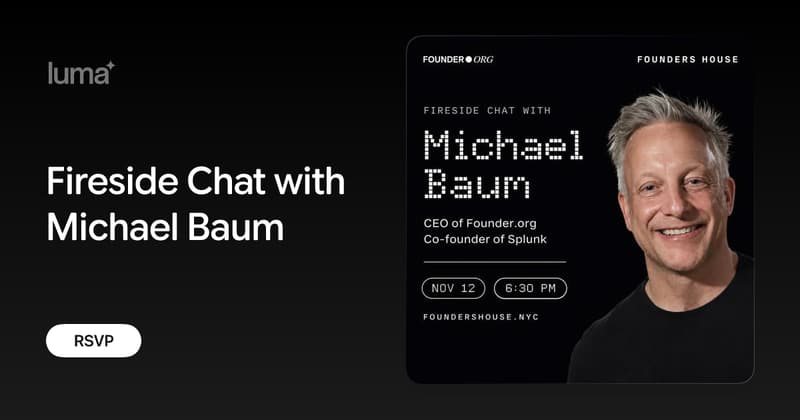 Michael Baum Brings the Splunk Founder Record Into Founders House|
 Founders House Takes the Founder Conversation Into a Williamsburg 5K|
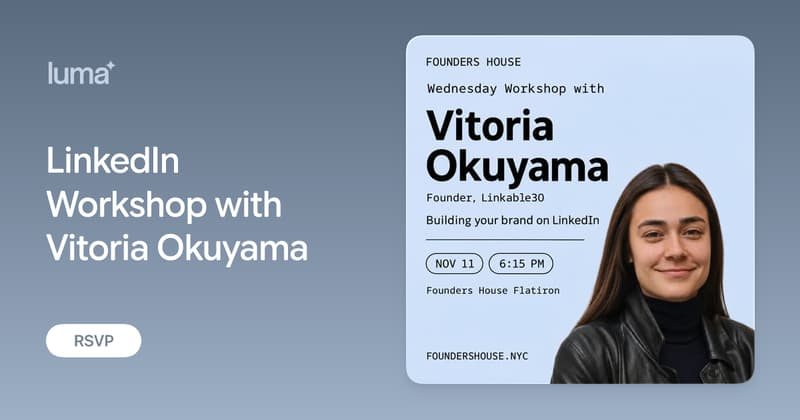 Founders House Turns the LinkedIn Profile Into a Working Founder Asset|Forbes CIO Summit Brings AI's Operating Decisions to New York|Nominal Raises $240M Series C for Hardware Intelligence|Blackletter Raises $6M Seed for Fixed-Fee Legal Work|Stripe AI Monetization Dinner Examines Enterprise Pricing|How to Build a Black Hole Comes to Simons in New York|