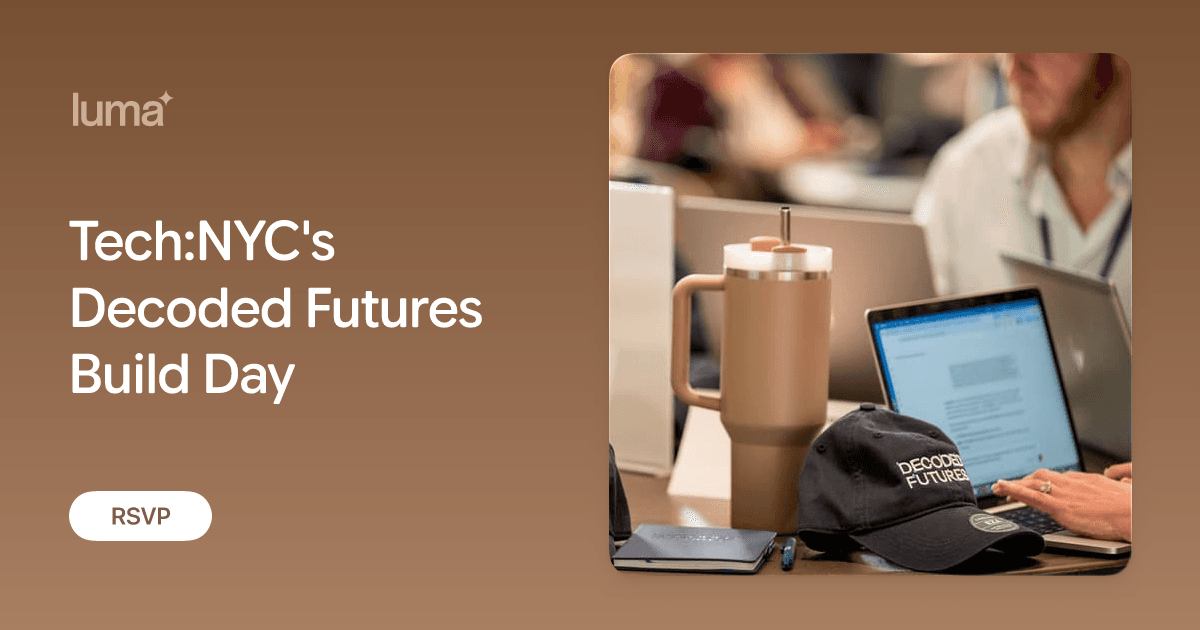
Tech:NYC's Decoded Futures Build Day will bring social-sector leaders and technologists together near Union Square in New York on November 19, 2026, from 1-5 p.m. EST. Part of Tech:NYC Foundation's Tech Gives Back Week, the free, approval-based gathering will focus on practical applications of AI to organizational capacity. The RSVP deadline is November 12, and the precise address is available through registration.
For a nonprofit operator, the useful question is what a tool can take off the team's plate without creating another job somebody has to supervise. Build Day offers a setting to work through that question alongside technical collaborators. Its wider significance lies in the transfer of operating knowledge: the person who understands a service bottleneck getting enough time with someone who can help turn that understanding into a testable process.
The nonprofit brings the problem definition
A nonprofit's recurring task can contain more judgment than its description suggests. Preparing a report, reconciling information or answering a routine inquiry may involve exceptions that only the staff member doing the work can explain. Put that task in front of a technologist too quickly, and the conversation can race toward a solution before either person has agreed on what a correct result looks like.
That makes preparation part of the value of a collaborative afternoon. An operator considering Build Day could arrive with one clearly described workflow, its current owner and a concrete explanation of where time gets lost. A sanitized example can help a collaborator understand the work without assuming permission to use sensitive information. These are practical preparation choices, rather than a published requirement or a promised Build Day curriculum.
The intended encounter is between social-sector leaders and technologists, according to the organizer's event description. The potential benefit is unusually direct: operational experience can shape the technical question while the people making decisions are still together. The event's value will depend on how far those conversations get into the actual conditions of the work, including who will check the result after the afternoon ends.
A broader program already has operating context
Decoded Futures, an initiative under the Tech:NYC Foundation, works on AI adoption in the social sector through resources, learning and connections to technical expertise. Its separate seventh cohort brought together 24 nonprofits for a program running from October 13 through November 17, 2026. Tech:NYC's October cohort announcement describes organizations spanning education, health, housing, food access and other missions.
That breadth matters because the work determines the constraints. A process built around a school's information needs will carry different obligations from one supporting housing or health services. Grouping them under nonprofit AI can be useful for convening people, but a working session has to get much more specific. The operator's knowledge of the service, its users and its exceptions becomes part of the design material.
The cohort also provides context without supplying a guest list. Its participants are not confirmed attendees of the November 19 Build Day, and the cohort's institutional supporters should not be treated as sponsors of this event. The relevant connection is the program's ongoing work with organizations learning where AI can help. Build Day creates another opportunity to examine a practical problem within that broader effort.
A prototype needs a route back into the organization
The program's Prompt Cookbook V2 is a useful indication of the practical territory. The resource covers tasks involving existing files, information and organizational workflows. For recipes that connect to accounts or systems, it calls for deliberate permissions, a read-only default and human approval of outgoing actions. The cookbook is context for preparation, not an announced schedule for November 19.
Those boundaries belong inside the design conversation. If an output requires someone to check every line, that review has a cost the team should be able to see. If a process depends on data an organization cannot safely provide, a convincing demonstration leaves the central operating question unanswered. An afternoon of collaboration becomes more useful when those conditions are visible early enough to shape what gets attempted.
There is also a handoff to consider. The person who returns to the workflow needs to understand what was built, what information it uses and how to recognize a bad result. A prototype can expose a promising direction, but maintaining that direction requires an owner and a manageable next step. DevCuration's coverage of Notion Build Bar in New York examines another setting where participants can bring a specific workflow into a working session; the events have separate organizers and audiences. For a nonprofit with limited staff attention, those decisions can determine whether a build session becomes useful work the following week.
Funders have a stake in the work after the session
Decoded Futures has already explored AI capacity-building with philanthropy. Tech:NYC's account of its funder-focused sixth cohort, published in June, describes funders examining how AI could affect their own work and their support for grantees. That historical program helps explain the wider institutional interest in nonprofit technology, without establishing who will attend or support November's Build Day.
For a funder evaluating this kind of effort, the visible artifact is only part of the story. Time for staff learning, permission to test a process and support for maintenance can affect whether an experiment survives. Those are useful questions to bring to capacity-building discussions because the people delivering services will eventually absorb the consequences of the technical choices. A polished demonstration can make that less obvious than it should be.
Registration for the Union Square afternoon remains subject to host approval, and the public materials do not identify a confirmed speaker lineup or disclose a precise venue. The opportunity is the working relationship itself: nonprofit leaders explaining what their organizations need, with technologists available to explore a practical response. After November 19, the workflow will return to somebody's desk, carrying whatever clarity, decisions and unfinished work that collaboration produces.
 nextNYC Moves the Founder-Investor Conversation Across Three Neighborhood Tables|
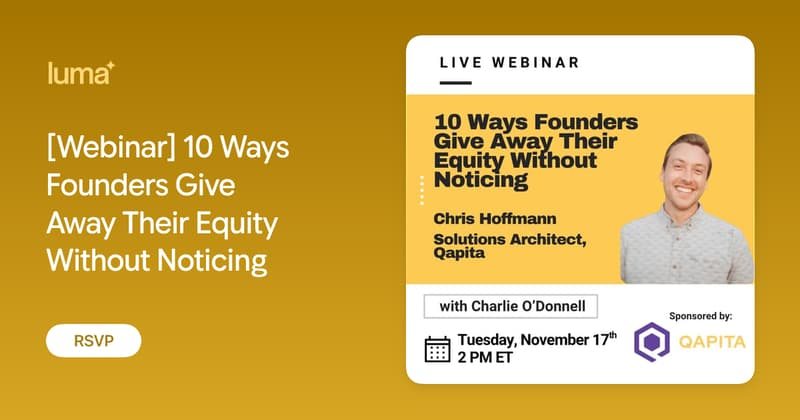 nextNYC and Qapita Trace the Small Decisions That Reshape Founder Equity|
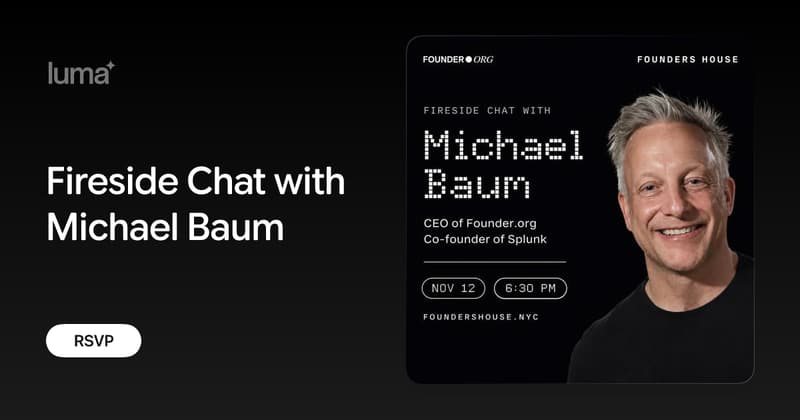 Michael Baum Brings the Splunk Founder Record Into Founders House|
 Founders House Takes the Founder Conversation Into a Williamsburg 5K|
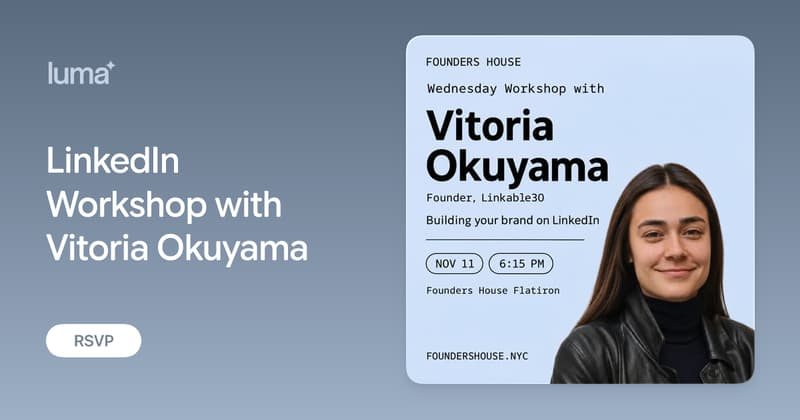 Founders House Turns the LinkedIn Profile Into a Working Founder Asset|Forbes CIO Summit Brings AI's Operating Decisions to New York|Nominal Raises $240M Series C for Hardware Intelligence|NYC Industrial Tech Breakfast Connects AI to Operations|Stripe AI Monetization Dinner Examines Enterprise Pricing|How to Build a Black Hole Comes to Simons in New York|