





Agentio Hiring Event Signals Growing Focus on AI-Native Creator Advertising Infrastructure
Agentio will host a May 20 event in New York featuring CEO Arthur Leopold and former Google VP Mike Romoff as creator advertising infrastructure becomes a larger focus across advertising technology and enterprise marketing.
About This Event
Agentio’s upcoming hiring event in Manhattan reflects a broader shift happening inside the advertising industry as creator advertising evolves from fragmented campaign execution into a more operationally standardized, AI-native infrastructure category.
The event, titled “Meet the Team Transforming Advertising — We’re Hiring!”, will bring together startup operators, engineers, advertising executives, GTM leaders, and technology talent for a discussion centered on the future of creator advertising systems, enterprise workflow automation, attribution infrastructure, and AI-powered advertising operations.
The gathering will feature Agentio CEO & Co-Founder Arthur Leopold alongside Mike Romoff, the former VP of Global Ad Sales at Google and former CRO at Reddit. Catherine Etter is also helping host the event.
The strategic relevance extends beyond recruiting. Enterprise brands are increasingly under pressure to manage creator advertising campaigns across fragmented digital ecosystems while maintaining measurable performance, operational consistency, scalable reporting, and tighter budget accountability.
That operational friction is creating a growing market opportunity for companies building infrastructure around creator advertising workflows, automation, measurement, and enterprise coordination systems.
About the Event
Agentio’s May 20 event will take place in New York City’s NoMad district and is designed as a focused discussion around creator advertising infrastructure, startup hiring, and the changing operational demands inside modern advertising technology.
Rather than positioning the event as a traditional networking session or conference-style panel discussion, Agentio appears to be using the gathering to frame a larger market thesis: creator advertising is becoming an enterprise infrastructure problem rather than simply a media buying category.
That distinction matters because enterprise advertising organizations increasingly operate across decentralized attention ecosystems involving creators, podcasts, YouTube channels, newsletters, social platforms, and community-driven media environments.
As creator-led distribution continues expanding, operational complexity is increasing alongside it. Brands now require systems capable of handling campaign coordination, creator workflows, reporting, attribution, performance analysis, automation, compliance oversight, and scalable execution across increasingly fragmented digital channels. Agentio is positioning itself directly inside that infrastructure layer.
Why This Matters
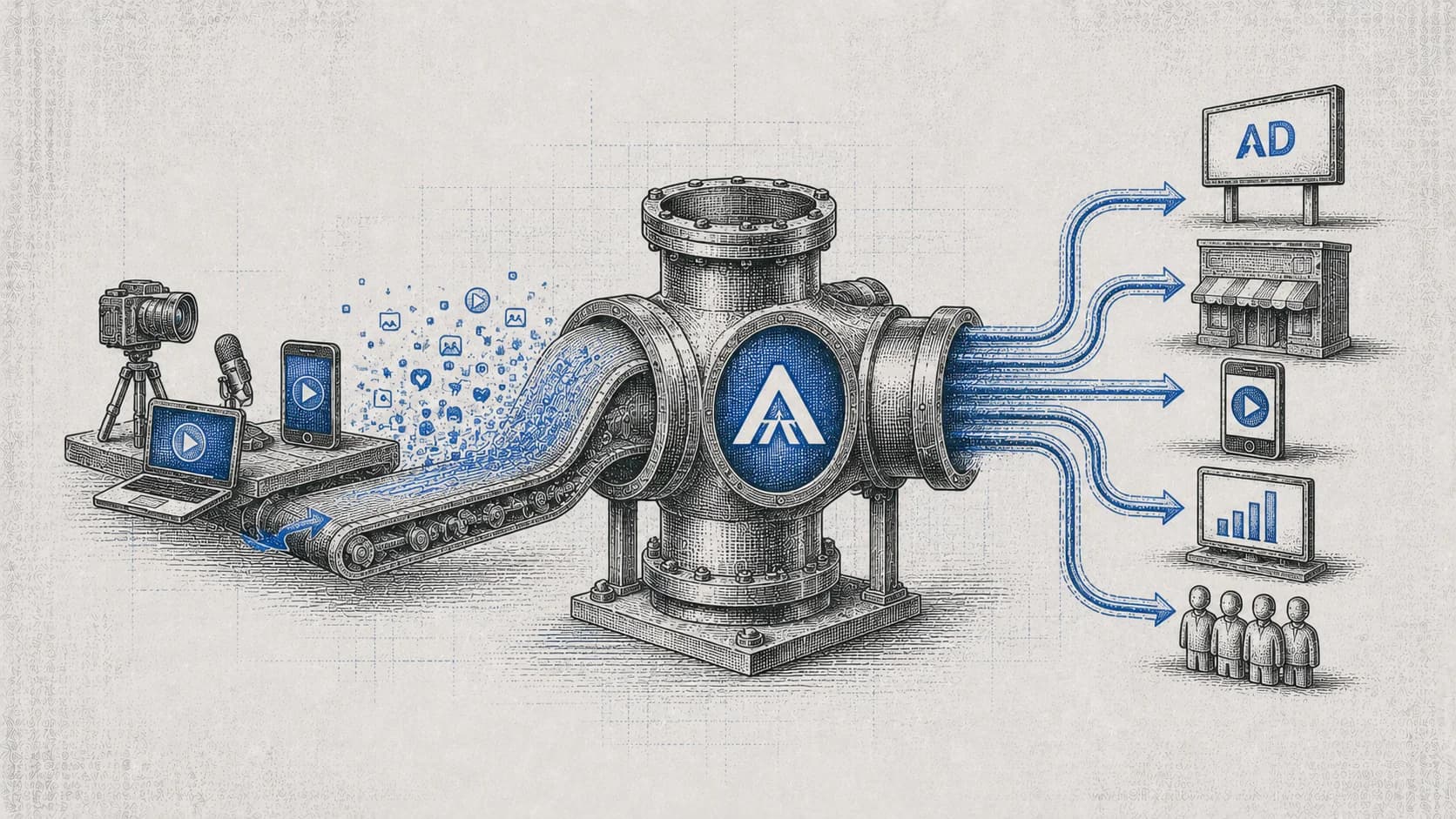
Agentio is part of a growing group of advertising technology companies attempting to modernize creator advertising infrastructure using AI-native operational systems and enterprise workflow tooling. Creator advertising infrastructure refers to the software systems, automation layers, analytics platforms, attribution tools, workflow management systems, and operational technology used to manage creator-led advertising campaigns at scale.
Historically, creator advertising has operated through fragmented workflows involving agencies, spreadsheets, disconnected analytics tools, manual communication processes, and inconsistent reporting systems. That fragmentation becomes increasingly difficult for enterprise organizations managing larger creator budgets across multiple campaigns, creators, and distribution channels simultaneously.
The market opportunity is becoming clearer as enterprise brands shift more advertising attention toward creator ecosystems while demanding greater operational consistency, measurable ROI, scalable reporting infrastructure, and workflow automation.
Agentio appears to be positioning itself less like a traditional influencer marketplace and more like enterprise infrastructure for creator monetization and creator campaign operations. That positioning could become strategically important as advertising organizations continue searching for operational efficiency across decentralized media environments.
Market Context
Advertising technology is entering an uncomfortable correction cycle. Every company suddenly claims AI changes everything while large portions of the industry are still rebuilding old workflows with newer terminology attached to them. Some companies are building legitimate infrastructure. Others are repackaging operational inefficiency behind polished demos and expensive decks.
Brands are exhausted by fragmentation. Consumer attention keeps decentralizing across creators, podcasts, YouTube channels, newsletters, TikTok communities, and niche digital ecosystems. Traditional advertising channels remain powerful, but trust increasingly moves through creator-led distribution. The problem is that creator advertising infrastructure still behaves more like a collection of disconnected transactions than a mature enterprise system. That creates significant market opportunities for companies capable of organizing creator workflows into scalable infrastructure layers.
Agentio is entering a highly competitive category where startups across advertising technology, enterprise AI, creator monetization, and marketing automation are all racing toward the same objective: reducing operational friction around digital attention markets. The winners likely will not be determined by who delivers the loudest branding campaign. They will be determined by who removes complexity fastest for enterprise operators managing real advertising budgets. That tends to decide software markets eventually.
Why the Hiring Angle Matters
The hiring component of the event carried more strategic weight than typical startup recruiting campaigns. Good companies recruit talent. Serious companies recruit conviction during category formation.
Engineers, GTM leaders, product operators, and advertising talent have become significantly more selective about where they place their time. Market conditions changed that psychology. Operators are now evaluating founder clarity, infrastructure durability, timing, category strength, and whether leadership teams genuinely understand the market pressures they claim to solve. That is one reason smaller, high-signal gatherings are regaining influence across the startup ecosystem.
New York still creates these collisions unusually well. Somebody arrives expecting networking drinks and leaves reconsidering an entire career trajectory after one sharp conversation. That sounds dramatic until you realize most meaningful hiring decisions inside technology rarely begin through formal application systems anymore. They begin through trust, repeated exposure, and proximity to operators who think clearly under pressure.
Agentio appears fully aware of that dynamic. The company is not presenting hiring as administrative recruiting. It is presenting hiring as alignment around a market thesis: creator advertising is becoming infrastructure, AI is compressing execution timelines, and the companies building connective systems underneath digital attention markets may become disproportionately valuable during the next market cycle.
What This Signals
The advertising industry is moving away from channel obsession and toward infrastructure consolidation. The next generation of market leaders likely will not be the loudest influencer agencies or the flashiest creator campaigns. The durable companies will be the ones building systems capable of making creator advertising measurable, repeatable, automatable, and operationally scalable for enterprise organizations.
That shift matters because infrastructure businesses historically become deeply embedded into enterprise workflows. Once those workflows mature, replacement becomes expensive financially, operationally, and politically inside organizations. Agentio is betting creator advertising has reached that threshold.
Mike Romoff’s involvement reinforces the credibility of that thesis because he has already operated through multiple platform transitions where infrastructure ultimately became more valuable than media itself. Google scaled search advertising through operational maturity around intent. Reddit monetized community engagement through scalable systems around audience participation. Creator advertising now appears to be approaching a similar transition point. The market rarely rewards the first people who notice a trend. It usually rewards the companies capable of industrializing it.
Frequently Asked Questions
What is Agentio?
Agentio is a company building AI-native infrastructure for creator advertising, creator monetization workflows, and enterprise-scale creator campaign management.
What is the Agentio May 20 event?
The Agentio May 20 event is a hiring and ecosystem gathering in New York City focused on creator advertising infrastructure, AI-native advertising operations, and the future of creator monetization systems.
Who is Arthur Leopold?
Arthur Leopold is the CEO & Co-Founder of Agentio.
Who is Mike Romoff?
Mike Romoff is the former VP of Global Ad Sales at Google and former CRO at Reddit with extensive experience in advertising infrastructure and platform monetization.
What is creator advertising infrastructure?
Creator advertising infrastructure refers to the software systems, automation tools, attribution platforms, workflow layers, analytics systems, and operational technology used to manage creator-led advertising campaigns at enterprise scale.
Why is creator advertising infrastructure becoming important?
Enterprise brands increasingly rely on creators for audience engagement and distribution, but many creator campaign workflows remain fragmented, difficult to scale, and operationally inefficient.
Why does AI matter in creator advertising?
AI can help automate workflows, improve attribution analysis, accelerate campaign coordination, streamline reporting systems, and reduce operational complexity across enterprise advertising organizations.
Why are smaller startup events becoming more influential?
Smaller, high-trust gatherings create stronger relationship density, more direct market conversations, and better recruiting environments for experienced startup operators and technology talent evaluating new opportunities.