







Thea Energy Raises $100M as Fusion Stops Sounding Like Science Fair Theater
The fusion industry has spent decades living in the same neighborhood as flying cars and immortality startups: technically fascinating, commercially slippery, and permanently 20 years away from changing the world. Every few years somebody rolls out another glossy rendering of humanity’s clean-energy future while the electrical grid continues aging like a casino carpet in Atlantic City. Then Thea Energy raised $100M. Not a grant. Not a government science project disguised as a startup. A real institutional Series B led by US Innovative Technology Fund, with participation from General Innovation Capital Partners, Linse Capital, Calm Ventures, Climate Capital, Divergent Capital, Emerald Technology Ventures, Gaingels, Idemitsu Kosan, Overlay Capital, Timescale Ventures, and Whatif Ventures, alongside returning investors including Prelude Ventures, Lowercarbon Capital, Hitachi Ventures, Mercator Partners, Orion Industrial Ventures, Starlight Ventures, and Alumni Ventures.
That matters because venture firms are no longer just funding fusion as intellectual entertainment for physicists who enjoy explaining plasma dynamics to rooms full of confused billionaires. Investors are starting to treat fusion infrastructure as an industrial race tied directly to energy security, AI infrastructure demand, and geopolitical competitiveness. Thea Energy, based in Kearny, New Jersey, is building stellarator fusion systems using planar superconducting magnet arrays and software-defined controls. The company says the architecture is designed to simplify manufacturing and scalability compared to traditional stellarator systems, which historically looked less like manufacturable infrastructure and more like somebody bent a particle accelerator into abstract sculpture.
What Happened
Thea Energy announced a $100M Series B round to accelerate development of its stellarator fusion systems and expand manufacturing capacity in New Jersey. The funding will support construction efforts around Eos, the company’s integrated stellarator system, while also helping scale production of superconducting magnet arrays central to its architecture. The company previously raised a $20M Series A in 2024 led by Prelude Ventures.
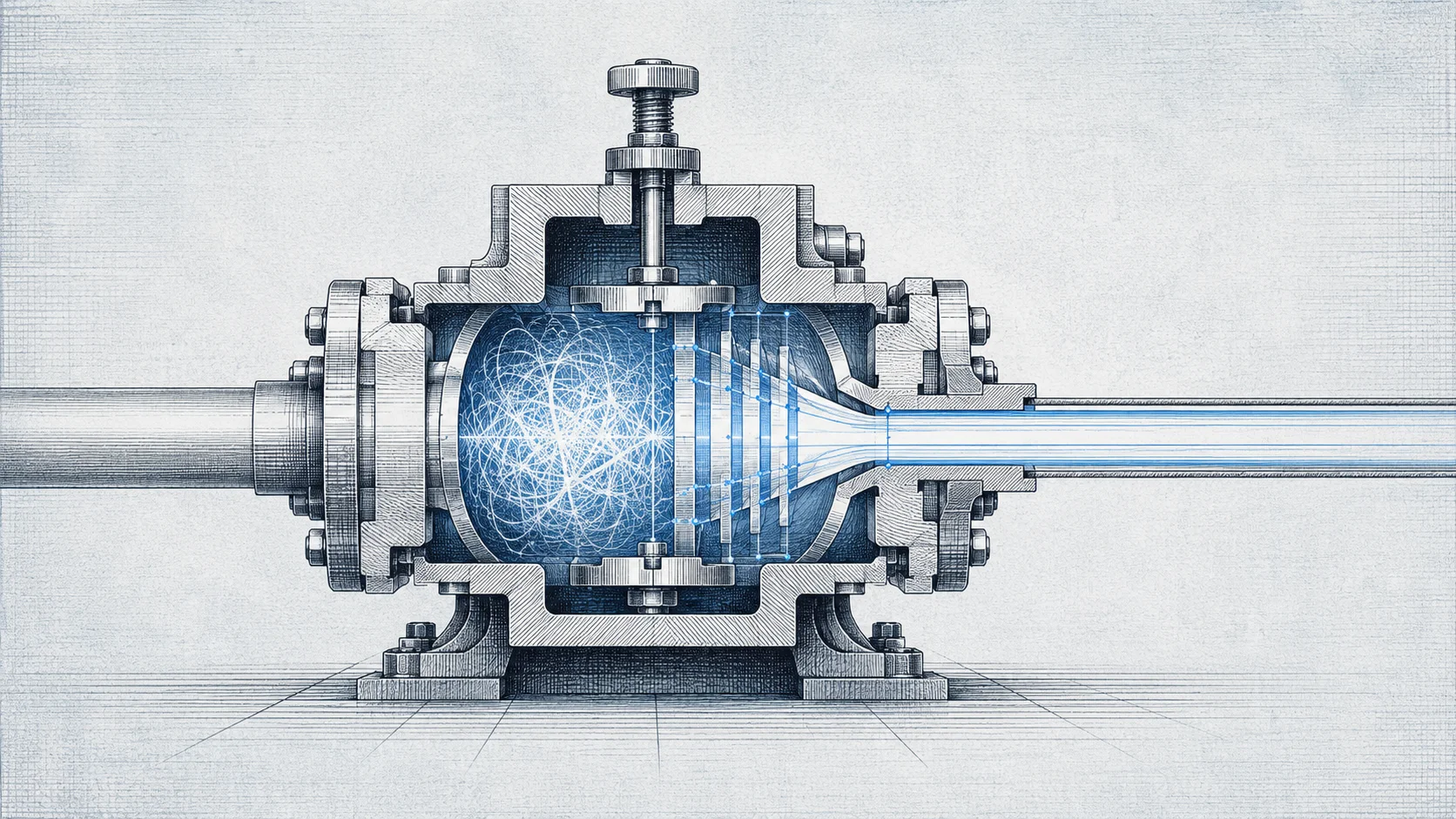
CEO and Co-Founder Brian Berzin has positioned Thea Energy around a specific thesis: fusion commercialization will depend as much on manufacturability and operational simplicity as theoretical physics. That sounds obvious until you realize most fusion startups still resemble experimental science programs trying to negotiate with economic reality after the fact. Thea Energy’s approach focuses on planar coil stellarators controlled through software-defined magnetic systems. The company argues this reduces engineering complexity compared to traditional stellarator designs that require highly intricate three-dimensional magnetic geometries. In simpler terms, they are trying to make fusion hardware behave less like custom-built cathedral architecture and more like scalable industrial infrastructure.
Why This Matters
The timing of Thea Energy’s funding round says almost as much as the technology itself. Artificial intelligence infrastructure is consuming energy at rates that are beginning to terrify utilities, regulators, and hyperscalers simultaneously. Every major AI company now talks about compute capacity the way Cold War governments once discussed uranium reserves. Datacenters are becoming strategic assets. Power generation is becoming a national security conversation again. Fusion suddenly looks less like speculative science fiction and more like optionality.
That does not mean commercial fusion is arriving next Tuesday. Anybody promising exact timelines in fusion should probably also be selling miracle supplements during late-night cable commercials. But institutional capital has clearly shifted from dismissing fusion outright toward identifying which companies might survive the long industrial buildout ahead. Thea Energy appears to be benefiting from that shift because its messaging aligns with operational realism rather than techno-utopian theater. The company is emphasizing manufacturing, scalability, facility expansion, and magnet systems. Investors tend to trust engineering companies that talk like industrial operators instead of TED Talk finalists.
The company has also demonstrated operation of its first full-scale Eos-spec magnet at power-plant relevant conditions and says it is already in discussions with power offtakers, hyperscalers, and utility partners. Those conversations matter because fusion economics ultimately live or die inside infrastructure markets, not physics journals.
The Competitive Landscape in Fusion
Thea Energy enters a fusion market that is becoming increasingly crowded and increasingly serious. Companies including Commonwealth Fusion Systems, Helion, TAE Technologies, and Type One Energy are all pursuing different technical pathways toward commercial fusion deployment. Some focus on tokamaks. Others pursue stellarators or magnetized target fusion architectures. Each approach carries its own tradeoffs involving stability, engineering complexity, energy efficiency, and scalability.
Thea Energy’s differentiation centers on programmable planar magnet arrays and software-controlled stellarator architecture. That focus positions the company closer to infrastructure engineering than pure research science. And honestly, that distinction matters more than most startup founders want to admit. The market does not reward elegance alone. Markets reward deployability. The energy sector is filled with technically brilliant ideas currently decomposing inside PowerPoint decks because nobody figured out how to manufacture them economically at scale.
Fusion companies now face a new challenge beyond physics: credibility fatigue. For decades, fusion promises have sounded like a guy at a poker table explaining how he is definitely about to turn things around after borrowing another $500. Investors know this history. Governments know this history. Utilities definitely know this history. That means modern fusion startups must prove operational maturity alongside scientific capability.
What This Signals About Deep Tech Capital
Thea Energy’s funding round also reflects a broader shift happening across deep tech investing. For years, software dominated venture economics because it scaled quickly, required relatively little capital, and produced returns on timelines investors could explain to limited partners without triggering panic attacks. Deep tech required patience, infrastructure, regulatory complexity, and unusually high tolerance for uncertainty.
Now AI infrastructure demand is forcing capital markets to reconsider hard-asset technology again. Energy systems, semiconductor manufacturing, compute infrastructure, robotics, defense technology, and industrial automation are all seeing renewed investor interest because software alone cannot support the next decade of compute growth. Somebody still has to build physical systems capable of powering the machine. Fusion sits directly inside that conversation.
Frequently Asked Questions
What is Thea Energy?
Thea Energy is a New Jersey-based fusion energy startup developing stellarator fusion systems using planar superconducting magnet arrays and software-defined controls.
How much funding did Thea Energy raise?
Thea Energy raised $100M in Series B funding led by US Innovative Technology Fund.
What is a stellarator fusion system?
A stellarator is a magnetic confinement fusion system designed for stable, continuous plasma operation using complex magnetic fields.
How is Thea Energy different from tokamak fusion companies?
Thea Energy focuses on software-controlled planar magnet arrays designed to simplify stellarator manufacturing and scalability.
Why are investors funding fusion startups now?
Rising AI datacenter energy demand and long-term energy infrastructure concerns are increasing investor interest in fusion energy companies.
Where is Thea Energy headquartered?
Thea Energy is headquartered in Kearny, New Jersey.
Who is Brian Berzin?
Brian Berzin is the Co-Founder and CEO of Thea Energy.
Why does fusion matter for AI infrastructure?
AI datacenters require enormous amounts of electricity, increasing demand for scalable long-term energy solutions like fusion.
