


Latest
Billables AI Raises Approx. $10.2M in Series A FundingBillables AI Raises Approx. $10.2M in Series A Funding|Beren Therapeutics Raises $300M for Adrabetadex Ahead of Critical FDA ReviewBeren Therapeutics Raises $300M for Adrabetadex Ahead of Critical FDA Review|Enlaye Raises $5M Seed to Bring Risk Intelligence to ConstructionEnlaye Raises $5M Seed to Bring Risk Intelligence to Construction|Kindred Ventures Raises $355M Debut Fund to Expand AI, Robotics, and Deep Tech InvestingKindred Ventures Raises $355M Debut Fund to Expand AI, Robotics, and Deep Tech Investing|Pi Security Raises $35M to Tackle Cybersecurity's Remediation ProblemPi Security Raises $35M to Tackle Cybersecurity's Remediation Problem|Flux Raises $5M Seed to Bring Engineering Visibility Into the Age of AIFlux Raises $5M Seed to Bring Engineering Visibility Into the Age of AI|WealthReach Raises $1M Seed Round to Bring Intent Data to Financial AdvisorsWealthReach Raises $1M Seed Round to Bring Intent Data to Financial Advisors|TensorWave Raises $350M Series B at $1.55B Valuation as the AI Infrastructure Race IntensifiesTensorWave Raises $350M Series B at $1.55B Valuation as the AI Infrastructure Race Intensifies|F2 Raises $14M Seed Round as Private Credit’s AI Arms Race AcceleratesF2 Raises $14M Seed Round as Private Credit’s AI Arms Race Accelerates|SonoThera Raises $125M Series B to Push Nonviral Gene Therapy Into the ClinicSonoThera Raises $125M Series B to Push Nonviral Gene Therapy Into the Clinic|Billables AI Raises Approx. $10.2M in Series A FundingBillables AI Raises Approx. $10.2M in Series A Funding|Beren Therapeutics Raises $300M for Adrabetadex Ahead of Critical FDA ReviewBeren Therapeutics Raises $300M for Adrabetadex Ahead of Critical FDA Review|Enlaye Raises $5M Seed to Bring Risk Intelligence to ConstructionEnlaye Raises $5M Seed to Bring Risk Intelligence to Construction|Kindred Ventures Raises $355M Debut Fund to Expand AI, Robotics, and Deep Tech InvestingKindred Ventures Raises $355M Debut Fund to Expand AI, Robotics, and Deep Tech Investing|Pi Security Raises $35M to Tackle Cybersecurity's Remediation ProblemPi Security Raises $35M to Tackle Cybersecurity's Remediation Problem|Flux Raises $5M Seed to Bring Engineering Visibility Into the Age of AIFlux Raises $5M Seed to Bring Engineering Visibility Into the Age of AI|WealthReach Raises $1M Seed Round to Bring Intent Data to Financial AdvisorsWealthReach Raises $1M Seed Round to Bring Intent Data to Financial Advisors|TensorWave Raises $350M Series B at $1.55B Valuation as the AI Infrastructure Race IntensifiesTensorWave Raises $350M Series B at $1.55B Valuation as the AI Infrastructure Race Intensifies|F2 Raises $14M Seed Round as Private Credit’s AI Arms Race AcceleratesF2 Raises $14M Seed Round as Private Credit’s AI Arms Race Accelerates|SonoThera Raises $125M Series B to Push Nonviral Gene Therapy Into the ClinicSonoThera Raises $125M Series B to Push Nonviral Gene Therapy Into the Clinic
Back to articles

Naveen Rao’s Uncomfortable Question: What If the Computer Is Wrong?
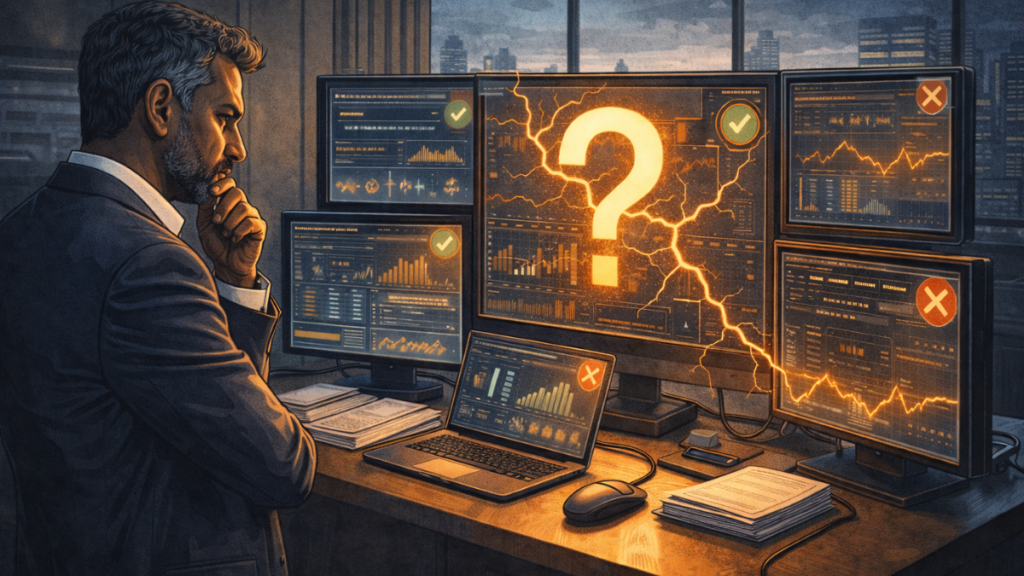
Unconventional AI did not arrive quietly. It showed up with a question most of the industry stopped asking somewhere between CUDA kernels and thermal throttling alerts. What if the computer itself is wrong. Not slow. Not overpriced. Wrong for the job we keep forcing it to do. On the a16z Show, Naveen Rao walked straight into that question with the calm of someone who has already sold two answers for nine figures and still thinks the room is far too comfortable.

Naveen Rao is not selling a chip. He is challenging an 80 yr abstraction. Digital machines were built for precision, determinism, and accounting. Intelligence is probabilistic, noisy, temporal, and physical. We simulate it anyway, then act surprised when the power bill starts looking like a policy brief. Data centers now draw roughly 4% of the US grid. GPUs push past a kilowatt. The human brain still runs on ~20W and never files a support ticket.

Unconventional AI is betting that physics beats simulation. Analog and mixed signal circuits that store probability in voltage and current. Systems that compute by evolving, not iterating. Hardware that behaves more like the thing it is meant to host. This is not nostalgia. It is an admission that the last turn may have been convenient, not correct.

The market heard it. A $475M seed round at a $4.5B valuation, co led by Andreessen Horowitz and Lightspeed Venture Partners, with Lux Capital, DCVC, Databricks, and Jeff Bezos participating personally. Two months old. No silicon yet. Plenty of conviction. The message was simple. If a new substrate for intelligence is coming, this is the team investors want holding the tools.

That team matters. Sara Achour brings the compiler logic to program uncertainty instead of pretending it is a rounding error. Michael Carbin has spent a career asking how software behaves when hardware stops promising perfection. MeeLan Lee carries the unglamorous burden of making nonlinear circuits manufacturable at scale. Together with Naveen Rao, this is not a moonshot crew. It is a systems crew, built for long nights and hard problems.