








Itera Raises $12M Seed to Accelerate Real-Time Hardware Prototyping
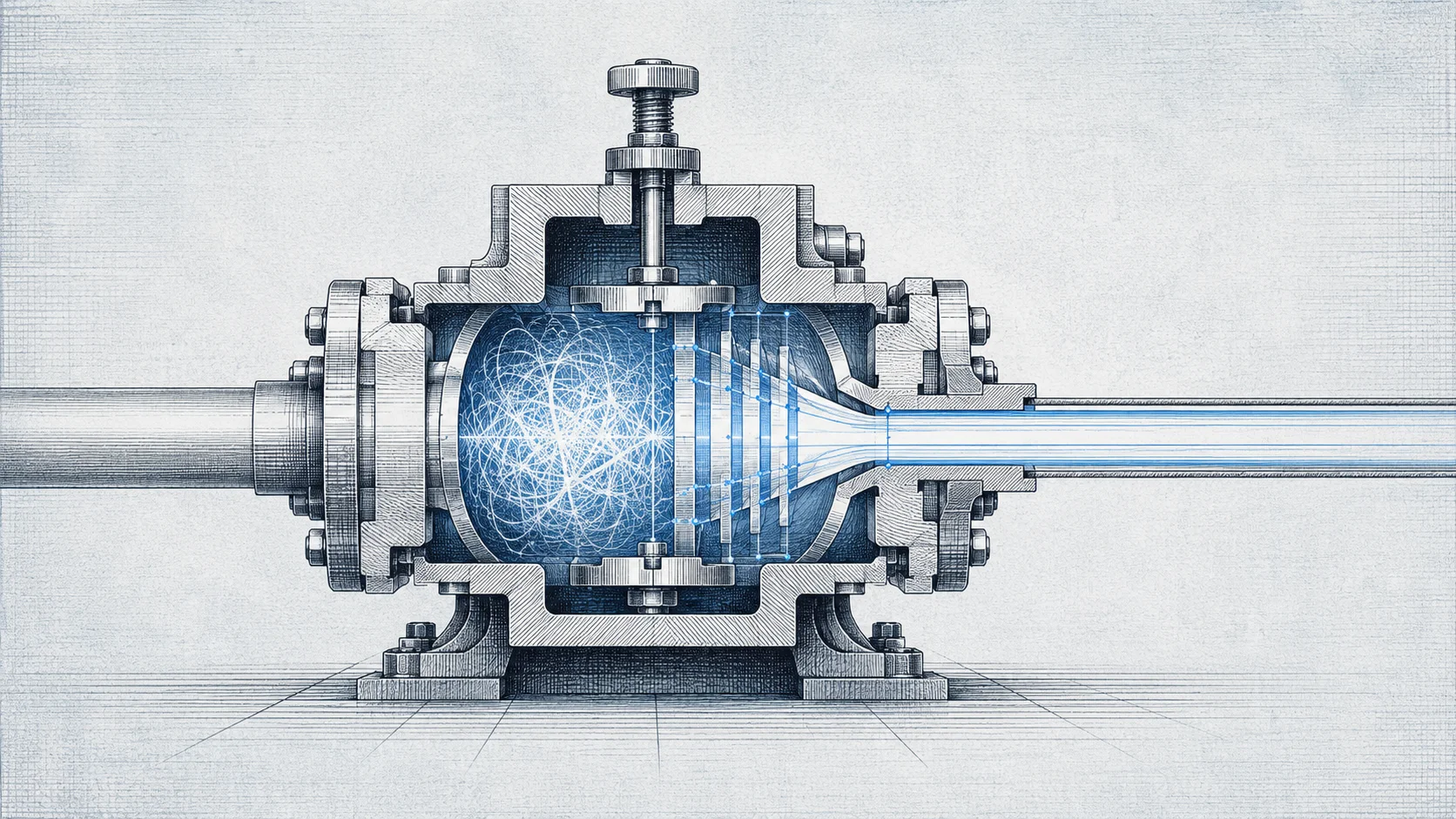
Itera, a San Francisco-based deep tech hardware infrastructure startup, just emerged from stealth with a $12M Seed round backed by Upfront Ventures, Costanoa Ventures, and Colle Capital. The company is building real-time hardware prototyping technology centered around what it calls a fluid circuit board, designed to let engineers modify and test hardware designs using real electrical behavior instead of relying entirely on simulation workflows.
That matters because modern infrastructure markets increasingly depend on hardware systems moving at software speed. AI infrastructure, autonomous systems, defense technology, semiconductors, robotics, and advanced automotive platforms all share the same hidden operational problem: hardware iteration cycles still move painfully slow underneath the surface. Itera says traditional PCB prototyping can take 2–6 weeks per design cycle while draining hundreds of thousands, sometimes millions, from engineering teams chasing validation. The company claims its glass-and-liquid-metal architecture can compress those cycles up to 1,000x faster. If accurate at scale, that changes far more than testing speed. It changes how engineering organizations learn, budget, experiment, and ship products.
The broader signal is hard to miss. Investors are pouring capital into AI infrastructure, semiconductor infrastructure, and defense modernization while the physical systems powering those sectors remain constrained by development drag. Itera is positioning itself directly inside that bottleneck.
What Happened
Itera emerged from stealth with a $12M Seed round backed by Upfront Ventures, Costanoa Ventures, and Colle Capital. The company is focused on real-time electronics prototyping infrastructure. According to the company’s official funding announcement, Itera’s core product is a fluid circuit board built on an architecture of glass and liquid metal. The company says engineers can rewire and test hardware designs in under a minute using actual components with real electrical behavior.
AJ Cooper, CEO and Co-founder of Itera, is attacking a problem hardware teams have quietly normalized for years: waiting. Waiting for fabrication. Waiting for validation. Waiting for revised boards to come back and confirm issues engineers often already suspected existed. Itera says its Electronics-as-a-Service model allows customers to remotely modify and test hardware through secure U.S.-based testing centers until designs are manufacturing-ready.
The market appears interested early. Itera says its initial production capacity has already been reserved by a top-5 global automotive OEM and defense neoprimes, while a leading hyperscaler and multiple chipset manufacturers are evaluating the technology. That sentence alone tells you where pressure is building across the market. Automotive platforms increasingly resemble data centers on wheels. Defense systems are becoming software-defined. AI infrastructure requires enormous physical compute expansion. Semiconductor infrastructure complexity keeps rising while development timelines remain brutally expensive.
Why This Matters
The modern economy behaves like software while still depending on physical systems that move much slower underneath the hood. That contradiction has become impossible to ignore. Hardware engineering still carries workflow assumptions built for a different era of manufacturing. Traditional PCB prototyping cycles create operational friction that compounds across engineering organizations. Every delayed board revision slows experimentation, increases burn, and reduces product velocity.
That is the real opportunity Itera is chasing. If Itera’s claims hold at scale, the company is not simply reducing engineering timelines. Faster hardware iteration changes budgeting behavior, testing frequency, organizational decision-making, and product development velocity simultaneously. The startups surviving the next infrastructure cycle will not just build faster. They will learn faster.
Market Context
Hardware has historically created tension inside venture capital. Software produced cleaner margins, shorter development cycles, and easier scaling models. Hardware often looked operationally exhausting, capital-intensive, and emotionally unstable. That sentiment has shifted dramatically.
AI infrastructure expansion, semiconductor supply chain pressure, reshoring initiatives, defense modernization, and advanced manufacturing investment have pushed hardware infrastructure back toward the center of strategic markets. That helps explain why investors are increasingly backing deep tech startup funding tied to infrastructure constraints instead of surface-level software abstraction layers.
Itera also arrives during a broader push toward secure domestic electronics infrastructure. Its emphasis on secure U.S.-based testing centers places the company directly inside larger conversations around supply chain resilience, domestic manufacturing, and data sovereignty. Those discussions are no longer policy talking points. They are boardroom priorities.
Competitive Landscape
Itera is entering a market crowded with simulation software vendors, electronics manufacturing firms, and hardware development platforms. But its positioning sits somewhere different. The company operates between simulation and physical validation. That distinction matters. Simulation software predicts behavior. Itera is attempting to reduce the gap between prediction and real-world testing using actual components and live electrical behavior.
The strongest signal may not even be the funding itself. It may be the industries evaluating the technology early. Automotive OEMs, defense organizations, hyperscalers, and chipset manufacturers typically move carefully around infrastructure dependencies. They do not casually experiment with tooling tied to mission-critical engineering workflows. That level of early interest suggests the pain point is larger than many outside the industry realize.
What This Signals
The deeper story here is not about circuit boards. It is about industrial acceleration. Entire sectors are increasingly competing on iteration speed as much as product quality. Companies reducing development friction gain tighter feedback loops, faster learning cycles, and greater operational flexibility while competitors remain trapped inside legacy timelines.
Software learned this lesson years ago through continuous deployment. Hardware infrastructure may finally be approaching its equivalent shift. And when industries built around waiting suddenly optimize for immediacy, entire market structures tend to move with them.
Frequently Asked Questions
What is Itera?
Itera is a San Francisco-based deep tech startup building real-time hardware prototyping technology using fluid circuit board architecture.
How much funding did Itera raise?
Itera raised $12M in Seed funding.
Who invested in Itera?
The funding round included Upfront Ventures, Costanoa Ventures, and Colle Capital.
What does Itera’s technology do?
Itera says its technology allows engineers to modify and test hardware designs in real time using actual electronic components and liquid metal substrates.
Why does PCB iteration speed matter?
PCB prototyping delays increase engineering costs, slow product development, and reduce experimentation across hardware teams.
What industries could benefit from Itera’s technology?
Itera is targeting automotive, defense, hyperscalers, semiconductor companies, and advanced electronics manufacturers.
What is Electronics-as-a-Service?
Itera’s Electronics-as-a-Service model allows customers to remotely modify and test hardware designs through secure U.S.-based testing centers.
Who is AJ Cooper?
AJ Cooper is the CEO and Co-founder of Itera.
