









Cypher AI Raises $2M Seed to Modernize Biotech R&D Infrastructure
Biotech has a strange relationship with technology. The industry can sequence genomes, engineer cells, and model proteins with frightening precision, yet a shocking amount of research infrastructure still runs on spreadsheet archaeology and operational improvisation. Somewhere right now, a scientist is digging through Slack threads trying to locate a protocol update that should have been centralized 6 months ago. Modern biology often looks like advanced science trapped inside 2009 software habits. That operational dysfunction is exactly what Cypher AI wants to eliminate.
Cypher AI, a Cambridge, Massachusetts-based startup building AI-native workflow infrastructure for biotech and pharmaceutical R&D organizations, announced a $2M Seed round led by MaC Venture Capital, with participation from Epsilon Ventures, Connecticut Innovations, Sparta Group, and LiquidMetal Ventures. The company is positioning itself as the connective layer between scientific workflows, laboratory operations, data management, AI agents, and research execution. The financing matters because biotech infrastructure is quietly becoming one of the most important battlegrounds in enterprise AI. The industry already has discovery tools. What it lacks is operational coherence. Cypher AI is betting that the next generation of biotech winners will not simply produce better science. They will produce science faster, cleaner, and with dramatically less organizational friction.
What Happened
Cypher AI emerged from stealth with more than 800 scientists already using the platform and over 100,000 lab and computational workflows executed through its system. Early customers include DropGenie, Flock Bio, WayBio, Bioqore, MicroQuin, ENZIDIA, and Ranata Therapeutics. The company was founded by Yaoyu Yang, PhD, who previously worked as a scientist and engineer in growth-stage biotech environments where fragmented tooling created constant operational drag. That lived experience shaped Cypher AI’s core thesis: biotech organizations do not need another disconnected point solution. They need an intelligent operating layer that unifies research execution.
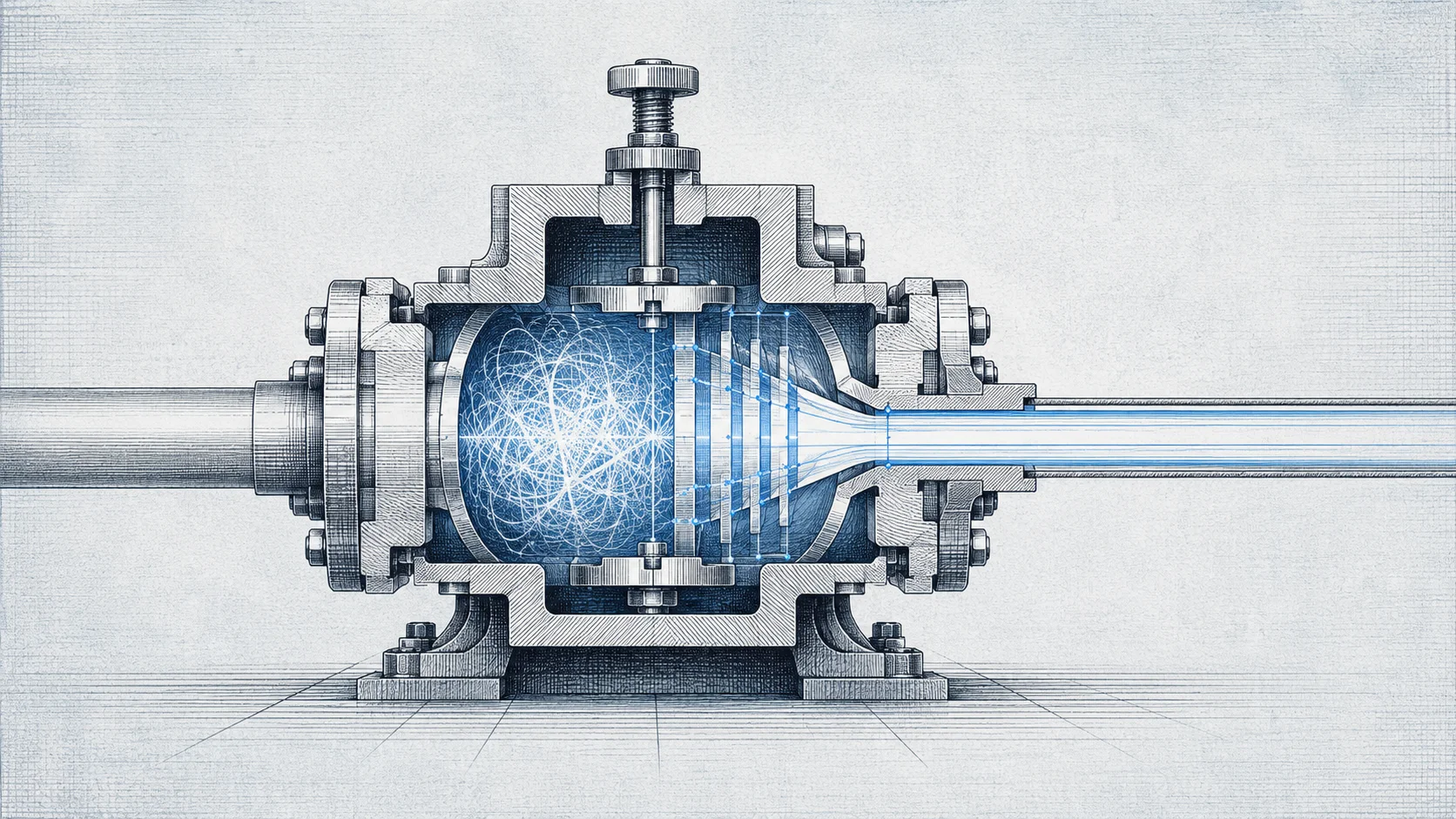
Cypher AI’s platform connects experiment design, protocol creation, workflow orchestration, vendor coordination, laboratory execution, and data analysis into a single environment. Instead of forcing scientists to bounce between Electronic Lab Notebooks (ELNs), Laboratory Information Management Systems (LIMS), spreadsheets, CRO dashboards, and email chains, the company wants research teams operating inside one adaptive infrastructure layer. That sounds obvious until you spend time inside biotech operations and realize how much of the industry still functions like a collection of disconnected software islands held together by exhausted humans and institutional memory. The company is also emerging from one of the world’s most concentrated biotech ecosystems. Cambridge and the broader Boston biotech ecosystem have become a proving ground for infrastructure startups attempting to modernize how scientific organizations operate at scale. That matters because biotech increasingly behaves like a data infrastructure problem disguised as a research problem.
Why This Matters
The biotech industry spent years obsessing over scientific breakthroughs while underinvesting in the systems required to operationalize those breakthroughs efficiently. Investors are starting to notice. AI infrastructure inside life sciences is becoming increasingly valuable because modern R&D generates overwhelming amounts of fragmented data. The operational challenge is no longer information scarcity. It is coordination. Labs now produce more experimental outputs than many organizations can realistically structure, analyze, or operationalize efficiently.
According to Grand View Research, the global laboratory informatics market is projected to surpass $5B by the end of the decade as biotech organizations modernize research operations and automate scientific workflows. That shift is creating demand for AI-native enterprise software capable of orchestrating research environments instead of merely documenting them. Cypher AI is entering the market at a moment when biotech companies are under pressure to reduce burn, accelerate timelines, improve reproducibility, and operate with greater computational discipline. Infrastructure suddenly matters because capital efficiency matters. This changes how investors evaluate biotech software companies. Five years ago, much of biotech SaaS revolved around digital recordkeeping. Today, investors want platforms capable of orchestrating workflows, integrating AI systems, automating repetitive execution tasks, and creating centralized operational intelligence across research environments. Cypher AI is not selling scientists another dashboard. The company is trying to become the operational nervous system underneath biotech R&D itself.
Market Context
Enterprise AI adoption has already transformed software engineering, cybersecurity, customer support, and financial services. Life sciences, however, remains one of the most operationally fragmented enterprise environments in technology. Part of the problem is historical. Biotech companies grew through layers of specialized tooling. ELNs handled documentation. LIMS platforms managed inventory and sample tracking. CROs operated externally. Data analysis lived somewhere else entirely. Scientists became human middleware connecting systems that were never designed to communicate effectively.
That fragmentation becomes increasingly dangerous as AI systems move deeper into scientific workflows. AI models are only as useful as the operational infrastructure surrounding them. An advanced research model cannot generate meaningful acceleration if experiment execution, data pipelines, and protocol management remain disconnected. This is why infrastructure startups are attracting renewed attention across biotech. Investors increasingly understand that AI alone does not modernize organizations. Workflow architecture does. Cypher AI sits directly inside the growing laboratory informatics and biotech workflow infrastructure market alongside broader shifts toward AI-driven scientific operations and automated research execution.
Competitive Landscape
Cypher AI operates in a crowded but still immature category that includes laboratory informatics providers, workflow orchestration platforms, ELN and LIMS vendors, and AI-enabled biotech tooling companies. The difference is positioning. Most legacy systems were designed around static recordkeeping and compliance workflows. Cypher AI is attempting to build infrastructure around adaptive scientific execution. That distinction matters because modern biotech research is increasingly iterative, automated, and computationally driven.
The company also benefits from leadership credibility. Yaoyu Yang brings direct experience from biotech operations, while Jamie Cho joined as VP of Engineering after leadership roles at Ginkgo Bioworks and Sapient Bioanalytics. Cynthia Pollard serves as CPO, and Michael Taylor, a former Ginkgo scientist, is part of the founding engineering team. That combination of software engineering and scientific workflow expertise is becoming increasingly important in biotech infrastructure markets where many companies understand one side of the equation but not both.
What This Signals
Cypher AI’s financing reflects a broader market realization: biotech infrastructure is no longer back-office software. It is becoming strategic infrastructure for AI-native research organizations. The companies reducing friction inside R&D environments will increasingly shape how quickly therapies move from hypothesis to execution. That creates enormous economic leverage.
There is also a deeper shift happening underneath all of this. Biotech historically rewarded scientific specialization. The next era may reward operational integration just as heavily. Organizations capable of unifying data, workflows, automation, and AI systems into cohesive environments will likely move faster than competitors still buried under fragmented tooling and procedural overhead. That is the real story behind this financing round. Cypher AI is not simply selling software into biotech. It is betting that the future of scientific research belongs to organizations that treat operational infrastructure as a competitive advantage instead of administrative overhead.
Frequently Asked Questions
What is Cypher AI?
Cypher AI is a Cambridge, Massachusetts-based startup building AI-native workflow infrastructure for biotech and pharmaceutical R&D organizations.
How much funding did Cypher AI raise?
Cypher AI raised a $2M Seed round led by MaC Venture Capital.
Who invested in Cypher AI?
Investors include MaC Venture Capital, Epsilon Ventures, Connecticut Innovations, Sparta Group, and LiquidMetal Ventures.
Who founded Cypher AI?
Cypher AI was founded by Yaoyu Yang, PhD.
What problem is Cypher AI solving?
Cypher AI addresses fragmented biotech workflows spread across spreadsheets, ELNs, LIMS systems, CRO platforms, and disconnected research tools.
What is AI-native biotech infrastructure?
AI-native biotech infrastructure refers to software systems designed around AI-driven workflows, automation, data orchestration, and adaptive scientific operations.
What are ELN and LIMS systems?
ELNs are Electronic Lab Notebooks used for scientific documentation, while LIMS platforms manage laboratory samples, workflows, and operational data.
Why does biotech infrastructure matter now?
Biotech companies are under pressure to reduce operational inefficiencies, improve reproducibility, accelerate research timelines, and scale AI adoption across research organizations.
